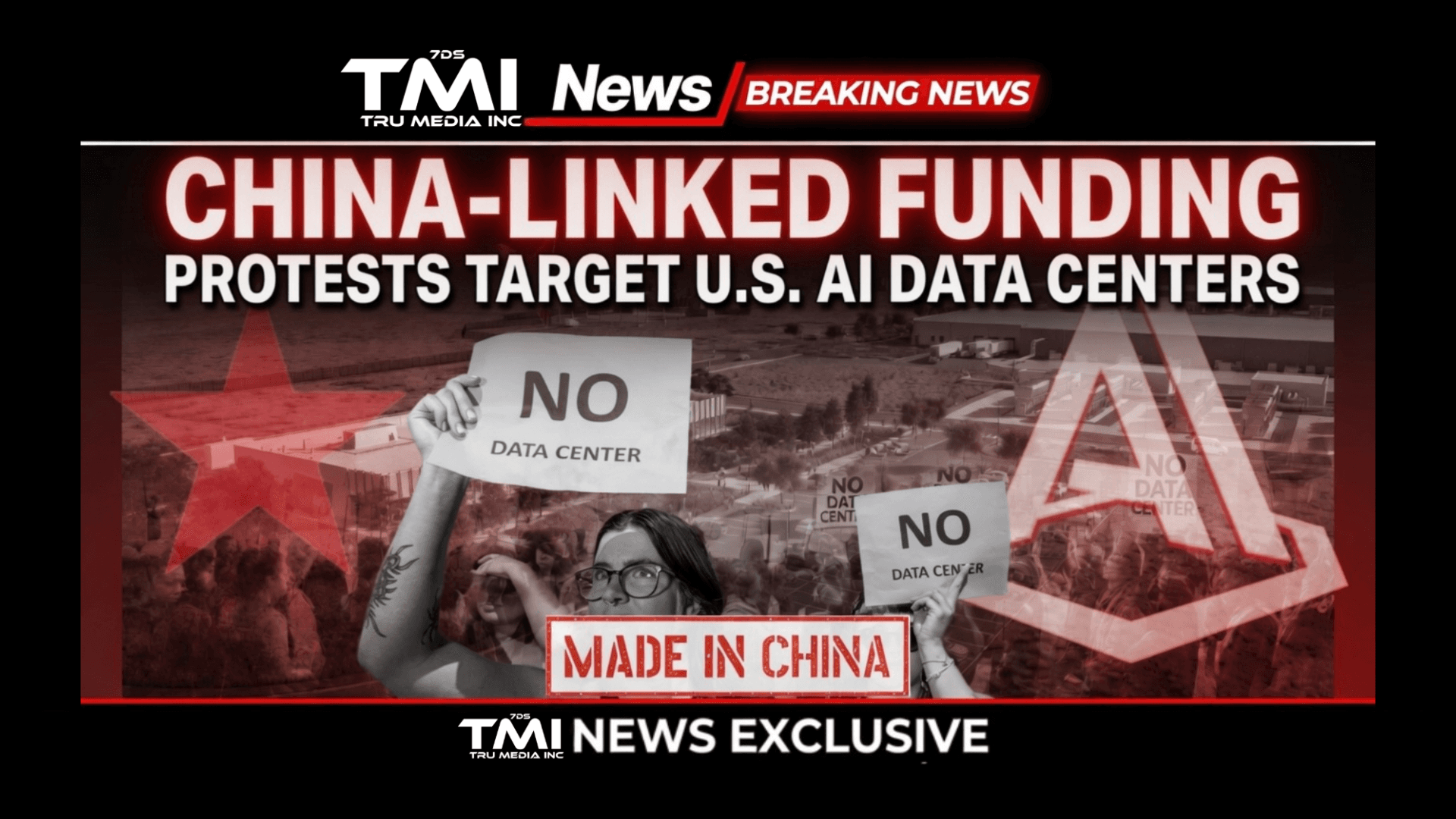
Recent reports have tied China-linked networks and foreign funding to efforts opposing or amplifying protests against U.S. AI data centers.
This has gained traction in conservative media and among analysts concerned about the U.S.-China AI race, with specific examples like a Utah project and calls for congressional investigations.
Here’s the latest breakdown based on available reporting.
Key Claims from Recent Reports
A prominent Bitcoin Policy Institute report (“Foreign Influence in the Campaign against American AI,” published around May 18, 2026, by Sam Lyman) outlines three main vectors of alleged foreign influence targeting U.S. AI infrastructure and data centers:
1. Chinese state media propaganda — Outlets like CGTN, China Daily, and Global Times have run English-language stories criticizing U.S. data centers for skyrocketing energy use, higher electricity bills, and environmental harm.
They’ve highlighted local opposition and pushed narratives around bans or delays in states like Maine, New York, and others. Meanwhile, China subsidizes up to half the energy costs for its own large AI data centers and is rapidly expanding its AI capacity.Specific Recent Examples
- Utah data center project (Kevin O’Leary): Investor Kevin O’Leary (“Mr. Wonderful”) publicly accused local groups opposing a large proposed AI data center in the Tremonton/Box Elder County area (approved by commissioners around May 4, 2026) of ties to China-linked funding networks.
- He pointed to organizations like Alliance for a Better Utah and funding channels connected to networks like Arabella Advisors. Around the same time, CodePink circulated an Instagram video attacking the project. O’Leary framed it as part of a broader effort to slow U.S. AI infrastructure.
- CodePink and activist overlap: CodePink (which has received significant Singham funding) has shifted focus at times from anti-Israel or other causes to opposing data centers, framing them in geopolitical terms (e.g., part of a “new Cold War on China”).
- Power the Future push for investigation: On May 3, 2026, the pro-energy group Power the Future sent a letter to Rep. James Comer and Sen. Rand Paul urging formal congressional investigations into “billionaire-funded, and potentially foreign-backed” campaigns against data centers.
- They noted 188 local opposition groups across 24 states and argued the opposition looks more coordinated/grassroots than it is. They referenced Interior Secretary Doug Burgum calling such opposition a potential “surrender” to China.
Important Context
There is substantial real, often local/grassroots opposition to data centers across the U.S. (from Maine to Arizona and beyond).
Concerns include massive electricity and water consumption by hyperscale/AI facilities, strain on local power grids, environmental impacts, and effects on communities.
This has already delayed or blocked dozens of projects worth well over $100 billion.
Analysts in the reports argue that while some opposition is organic and legitimate, foreign actors (especially China, which has a clear strategic interest in slowing U.S. AI progress) and aligned funding networks are amplifying it through propaganda, nonprofit funding, and content creation.
China is simultaneously racing ahead with its own subsidized data center and AI buildout.
Discussions on X (as of today, May 27) continue to circulate clips and commentary on these claims, particularly around the Utah project and Fox News coverage linking activist networks to China-aligned funding.
Bottom Line
The narrative you heard is based on these recent investigations and accusations, centered on the Singham network, Chinese state media, and broader foreign funding to activist causes.
It’s a politically charged topic tied to U.S. national security, economic competitiveness in AI, and transparency around nonprofit funding.
Primary sources pushing this include the Bitcoin Policy Institute report, Fox News reporting, NY Post, Power the Future, and statements from figures like Kevin O’Leary.
More mainstream coverage (e.g., WSJ) has focused more on the scale of genuine local pushback without always emphasizing the foreign funding angle.