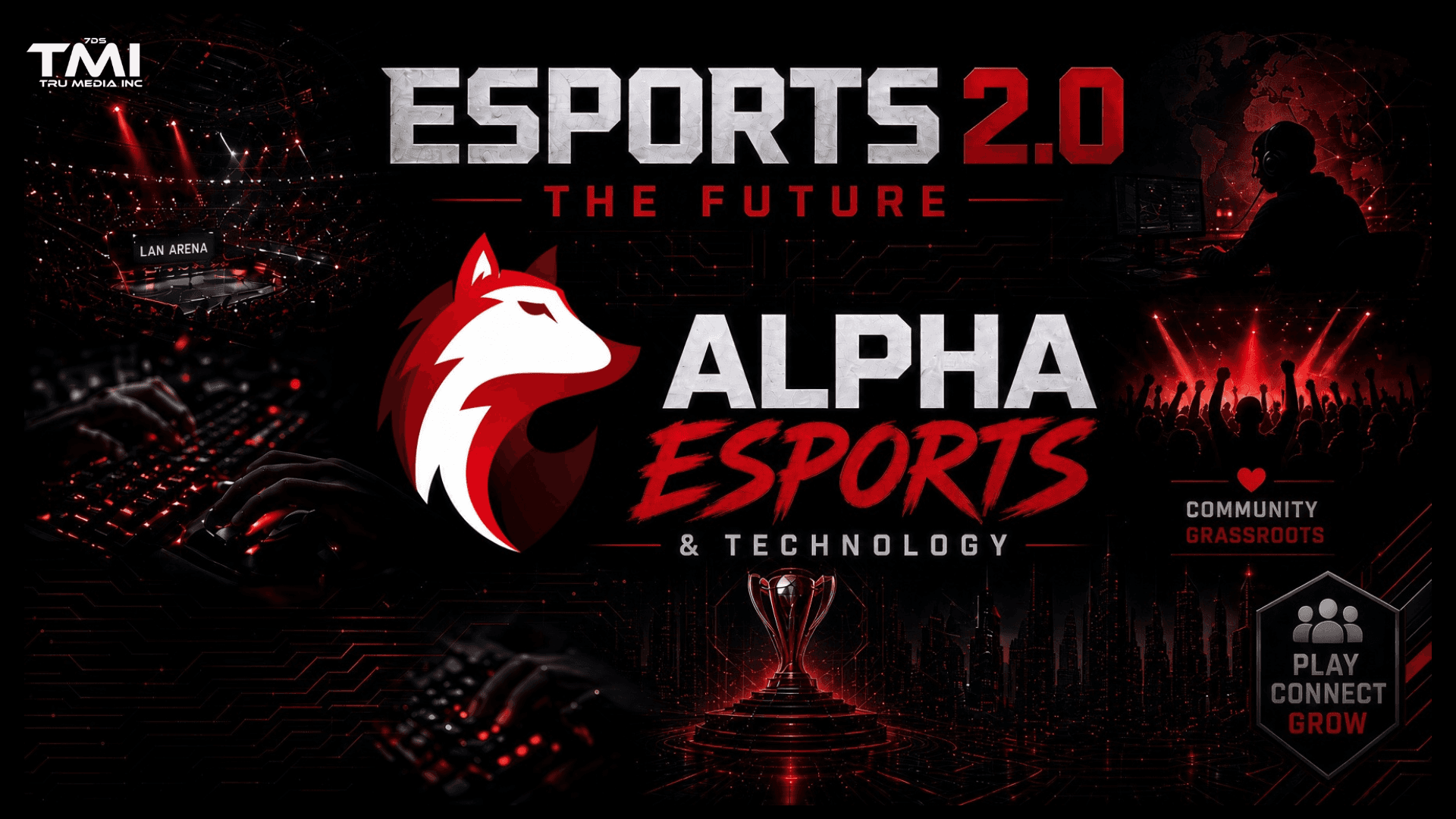
Major Sponsors Retreat from Grassroots Esports as Industry Debates “1.0” Boom Model vs. Sustainable “2.0” Future
October 21, 2026 — As big-money sponsors continue pulling back from competitive gaming, a growing debate is reshaping the industry: Is the era of venture capital, crypto, corporate, and gambling-fueled “Esports 1.0” ending, and should the future belong to slower, community-driven “Esports 2.0” organizations?
The current “esports winter” has made the contrast stark.
Organizations that once thrived on large sponsorship checks and franchise buy-ins are exiting or downsizing, while advocates argue the scene must return to its grassroots roots for long-term survival.
The Retreat of Big Money
Recent months have brought a string of high-profile exits.
Evil Geniuses, one of North America’s oldest and most recognizable organizations, announced it would cease operations in early November 2026, citing “constrained sponsorship and investment coupled with rising costs.”
Global Esports is leaving the scene entirely after nearly a decade, rebranding as an AI studio.
Multiple Dota 2 organizations have walked away, and Riot Games has reduced VALORANT Champions Tour partner slots, leaving established teams such as Cloud9 outside the guaranteed-revenue tier.
The retreat has reached even dedicated grassroots programs.
Trolli’s long-running League Trolli initiative — which since 2021 distributed more than $500,000 in prize money across hundreds of community tournaments in titles ranging from Rocket League and fighting games to Valorant and beyond — has ended.
Organizers confirmed this week that the final events have concluded and the series will not return in 2027, as Trolli shifts direction.
The program had become a reliable source of weekly cash prizes and support for independent tournament operators who otherwise struggled to attract brand dollars.
Non-endemic sponsors have also stepped away.
Luxury and mainstream brands that entered during the boom years—most notably BMW’s multi-team European deals—quietly let agreements expire when measurable returns failed to materialize.
Crypto money largely evaporated after high-profile collapses such as the FTX-TSM naming-rights deal, and gambling sponsorships, while still present in some titles, have not fully replaced the lost capital.
The result is a sponsorship desert at lower tiers.
Most VALORANT teams outside the partnered circuit, and many regional or amateur organizations across titles, compete with little or no formal brand support.
Prize money and digital item revenue often stay concentrated at the top, leaving Tier 2 and grassroots teams reliant on entry fees, player contributions, or fan funding.
Esports 1.0 vs. Esports 2.0
This environment has revived discussion of two competing philosophies.
Esports 1.0, as commonly described by industry observers, refers to the roughly decade-long model built on venture capital, large corporate and crypto sponsorships, franchised leagues with high buy-ins, and, more recently, gambling partnerships.
It prioritized rapid scaling, professional management, and top-tier spectacle but proved fragile when capital tightened and ROI remained difficult to prove.
Esports 2.0, by contrast, emphasizes community-focused organizations that do not depend on the biggest checks.
Proponents—including frameworks promoted by figures such as Marcus “Esports” Howard—describe it as a return to local identity, LAN centers, school and university pipelines, and organic fanbases.
It is expected to grow more slowly and generate less immediate revenue, but advocates argue it can be more resilient because it is rooted in consistent local participation rather than boom-and-bust sponsorship cycles.
Organizations Offering a Path Forward
Some groups are already operating closer to this model.
Alpha Esports & Technology, a minority- and veteran-owned center in Suwanee, Georgia, has positioned itself as a practical example of community-first esports.
The STEM.org-accredited facility blends competitive play with structured education in cybersecurity, coding, AI, and content creation.
It runs coached leagues, youth programs (including girls-focused initiatives), local tournaments, and partnerships that prioritize skill development, sportsmanship, and long-term pathways over short-term sponsorship dependency.
Founded by a former competitive player and Air Force veteran, the organization treats gaming as an entry point to broader tech skills and local community building rather than a vehicle for large external brand deals.
French team Karmine Corp has similarly demonstrated the power of intense community loyalty and arena-filling support without relying solely on franchise fees or heavy VC.
Community-run tournaments and education-linked programs have also expanded in several regions, even as traditional sponsorship dollars contracted.
What Comes Next
Not everyone agrees that abandoning the big-money model is the only path.
Publishers continue to experiment with digital goods, team skins, and stipends that can provide more predictable revenue than external sponsors.
A handful of brands remain active in grassroots settings, particularly when the activation is tied to talent development or youth programs rather than pure logo placement.
Still, the pattern is clear: the capital that fueled the rapid expansion of the late 2010s and early 2020s has largely receded.
Organizations that cannot adapt to leaner operations or build independent community value are struggling, while those that treat the local scene as the foundation rather than a marketing vehicle appear better positioned for the next phase.
Whether Esports 2.0 becomes the dominant model or simply a parallel track, the industry’s current contraction has forced a reckoning.
The question is no longer whether the old sponsorship-heavy approach was sustainable—it has already proven it was not—but whether a slower, community-centered alternative can deliver lasting stability.