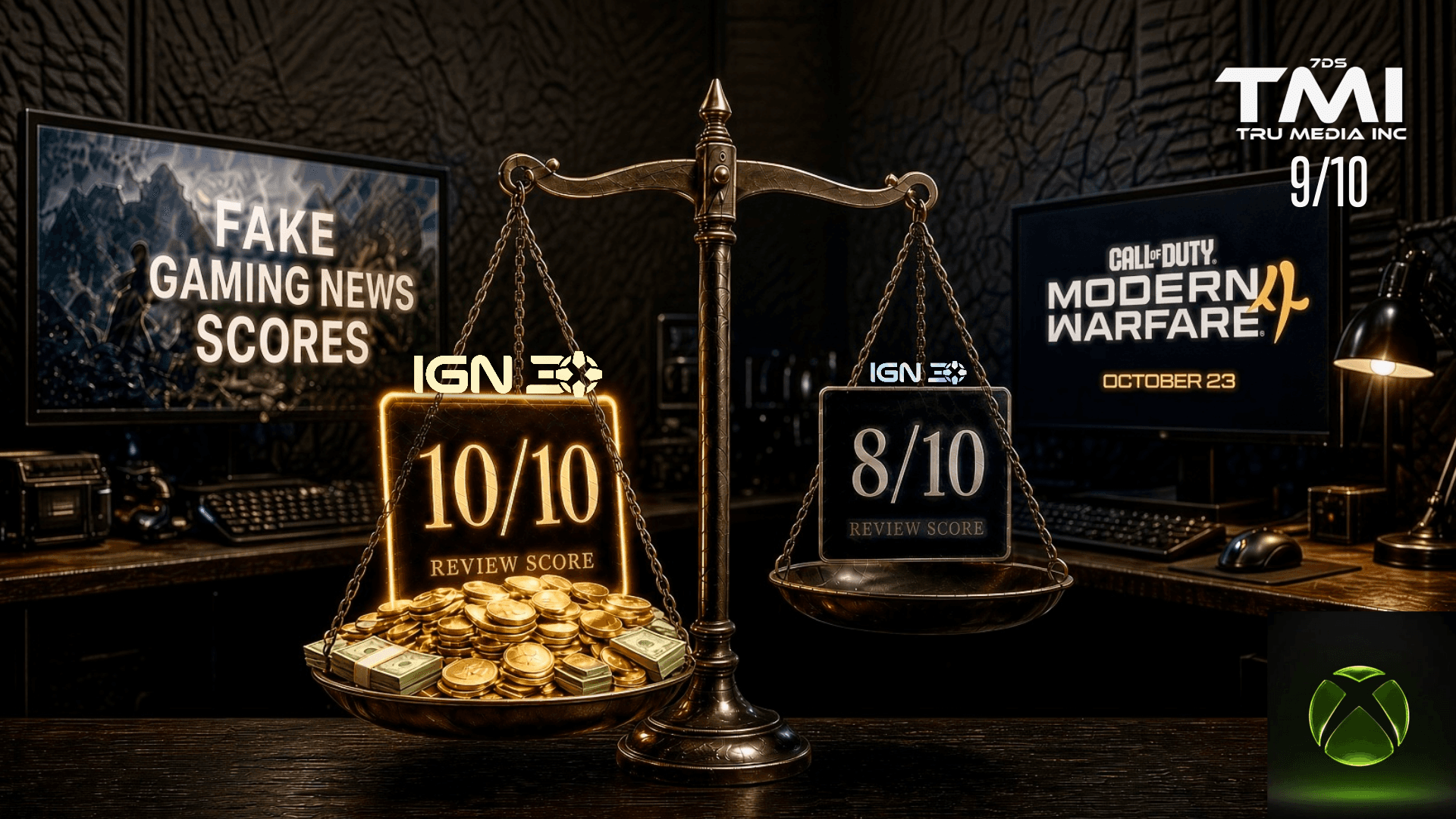
Industry Whispers Persist: Do Major Gaming Outlets Soften Scores for Big Advertisers?
In the competitive world of video game media, a long-running question continues to surface among developers, publicists, and readers: whether the outlets with the heaviest advertising relationships tend to deliver the most favorable coverage and highest scores.
The pattern, according to people who have worked on both sides of the relationship, is rarely described as an explicit quid pro quo.
Instead, it is framed as a quieter set of incentives.
Large publishers spend heavily on site takeovers, sponsored content, and pre-release campaigns.
When those same publishers later receive middling or critical scores from the same outlets, the commercial relationship can cool.
Smaller or less-promoted titles, by contrast, rarely enjoy the same volume of paid visibility and are more often treated as disposable.
Industry observers note that the biggest-budget games—those most likely to arrive with substantial marketing support—also tend to cluster in the upper half of review scales at the largest sites.
Critics of the system argue this is not solely a function of quality.
They point to the practical reality that a publication’s revenue depends in part on continued access and advertising dollars from the companies whose products it evaluates.
A sustained run of low scores on heavily advertised titles can, in theory, make future ad sales more difficult.
No major outlet has publicly confirmed that scores are adjusted for commercial reasons.
Editorial teams routinely emphasize independence, and most maintain formal separations between sales and reviews staff.
Yet the perception remains widespread enough that developers and publicists sometimes treat a high score from a high-traffic site as partly a function of how much the publisher has spent to be visible there.
The result, some in the industry say, is a landscape in which the games that can afford the most promotion also tend to receive the most generous critical treatment—while the precise mechanism is left unstated and unproven.
Whether that outcome reflects pure merit, selective coverage, or softer commercial pressures continues to be debated behind closed doors far more often than it is examined in public.