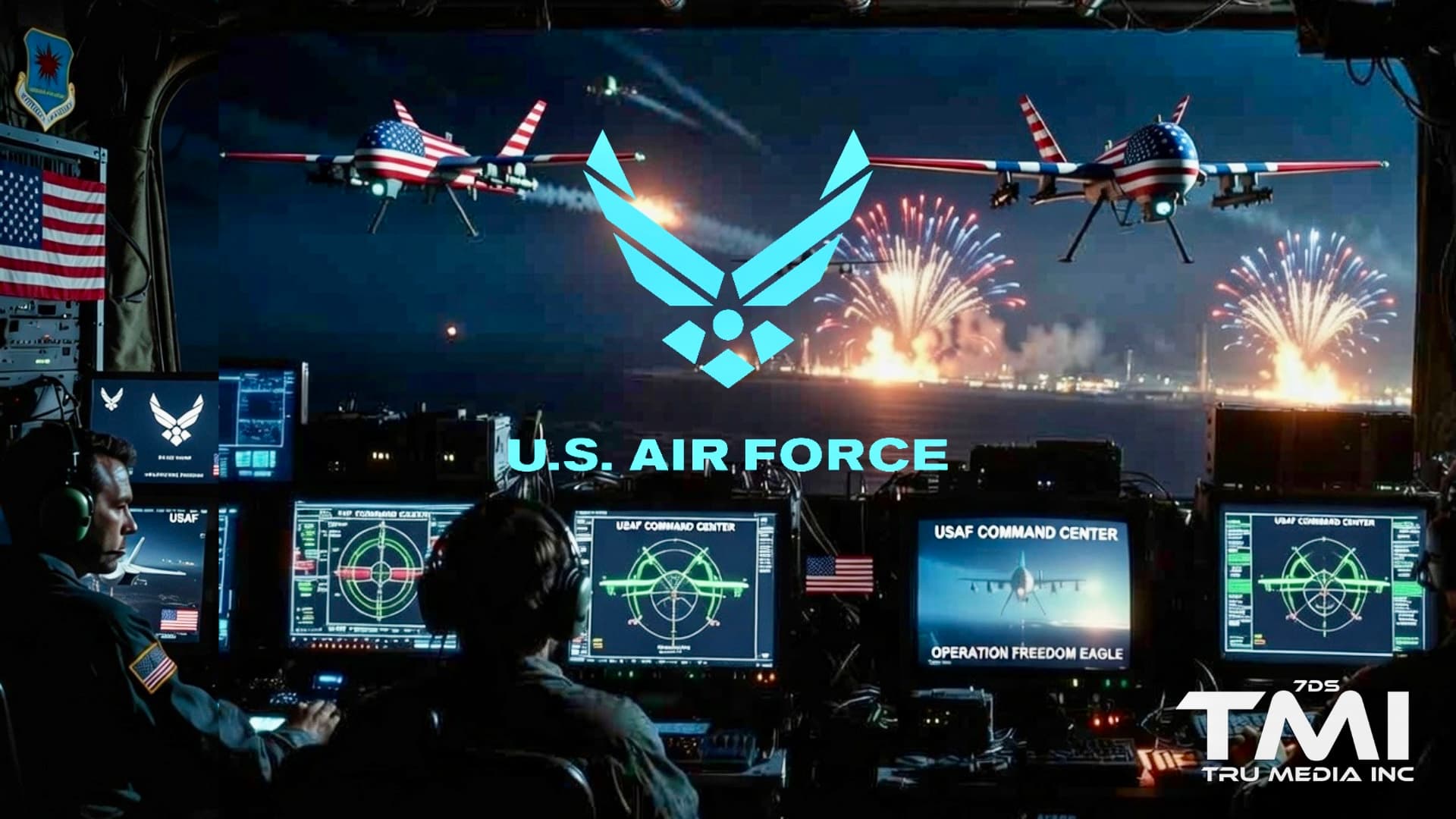
The war with Iran had escalated into full-scale conflict by late February 2026, and the night shift at Creech Air Force Base felt electric.
Dual screens flickered with live feeds from MQ-9 Reapers orbiting the Strait of Hormuz, the Persian Gulf, and the mountainous approaches to Tehran.
The air was thick with the low hum of cooling fans and the quiet chatter of operators who had traded Discord voice channels for secure comms nets.
Specialist Alex "Pixel" Ramirez—still the same kid from Ohio who'd once dominated Apex Legends lobbies—was strapped into his station at 02:06 AM CST on February 28.
His thumbs hovered over the familiar sticks: throttle, rudder, camera gimbal, weapon select.
The interface hadn't changed much since training; it still felt like an upgraded flight sim, except the targets weren't respawning bots.
Tonight's tasking was urgent.
Iranian IRGC fast boats had mined shipping lanes overnight, and a supertanker was taking sporadic fire from shore batteries near Bandar Abbas.
U.S. carrier strike groups—Ford and Lincoln—were holding position just outside the strait, launching F-35Cs in waves to suppress air defenses.
Alex's Reaper was tasked with persistent overwatch: spot, track, and—if cleared—neutralize threats closing on allied vessels.
His sensor operator, Staff Sgt. Mia "Ghost" Chen, a former Valorant pro who'd enlisted after crushing esports tournaments, scanned the thermal overlay.
"Pixel, got three heat sigs moving fast—looks like Boghammar boats, 30 knots, heading 270 toward the tanker lane.
Armed with what reads like C-802s."
Alex adjusted the zoom, muscle memory kicking in from thousands of hours in War Thunder and DCS World.
The boats' wakes cut white against black water.
"Copy. Designating targets Alpha through Charlie. Lining up for Hellfire ripple if we get green."
The feed was crisp, almost too clean—no lag, no packet loss.
He could see crew movements on deck, the glint of missile tubes.
It was intimate in a way no game ever was. In Call of Duty, you celebrated a killstreak.
Here, every trigger pull meant real lives ending—sometimes insurgents, sometimes civilians caught in the crossfire.
Alex had read the after-action reports from earlier strikes: collateral damage estimates, psychological evals for operators. He pushed it down. Focus on the now.
Ground control cleared the shot. "Reaper 47, weapons free on confirmed threats."
Alex exhaled, squeezed.
The screen bloomed white as the missile streaked away.
Seconds later, two boats vanished in fireballs; the third veered hard, trailing smoke. Confirmation came quick: "Splash two. One fleeing."
Mia leaned back.
"Clean work.
Feels like nailing a squad wipe in ranked, but... yeah."
Alex didn't laugh. He knew the disconnect some operators felt—the way the job blurred pixels and reality.
Former pilots like Brandon Bryant had talked about it years ago; newer ones, the gamer cohort, handled the detachment differently.
Studies from 2025 still held: gamers adapted faster, multitasked better, stayed calmer under pressure.
The Army's Best Drone Warfighter Competition earlier that month had crowned winners who openly credited their skills to late-night sessions in flight sims and FPV racing games.
Capt. Ronan Sefton had said it plain: the fastest learners, the most precise flyers? The guys who still hopped on after shift.
Across the trailer row, other stations hummed with similar scenes.
A team from the 432nd Wing monitored proxy flare-ups—Hezbollah rockets from Lebanon, Houthi swarms in the Red Sea—while enlisted operators fresh from gaming cons ran close-air support for Marine expeditionary units ashore in the Gulf.
One kid, barely 21, had transferred from hobby FPV racing leagues; his Reaper was now hunting IRGC missile trucks in the Zagros foothills.
The war wasn't won on screens alone. Missiles still flew both ways, oil prices had doubled, markets reeled.
But in these climate-controlled trailers half a world from the fight, a generation raised on controllers was keeping the line.
Alex powered through another orbit, eyes on the feed as dawn crept over the water.
His phone buzzed quietly in his pocket—a notification from his old clan:
"Queue up? New map dropped."
He smiled faintly, muted it.
Some things waited.
Right now, the map was real, the stakes infinite, and the respawns weren't coming back.