Project Helix is Microsoft’s official next-generation Xbox console (codenamed at GDC 2026), while PS6 is Sony’s upcoming PlayStation 6.
Both are expected around the 2027–2028 window and will use AMD’s next-gen Zen 6 CPUs + RDNA 5 GPUs, targeting 4K/120 FPS gaming with big leaps in ray tracing and AI upscaling.
They are not direct like-for-like competitors — they represent two very different philosophies.
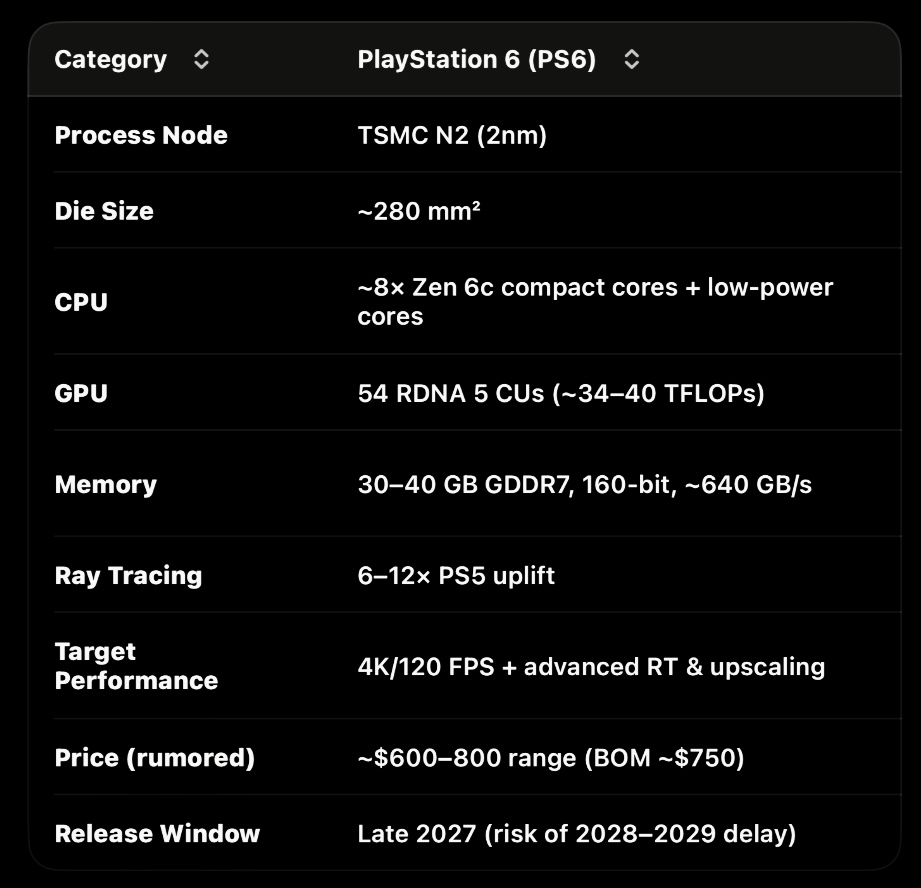
Spec Comparison (Rumored/Leaked as of May 2026)
PlayStation 6 (PS6)
Xbox Project Helix
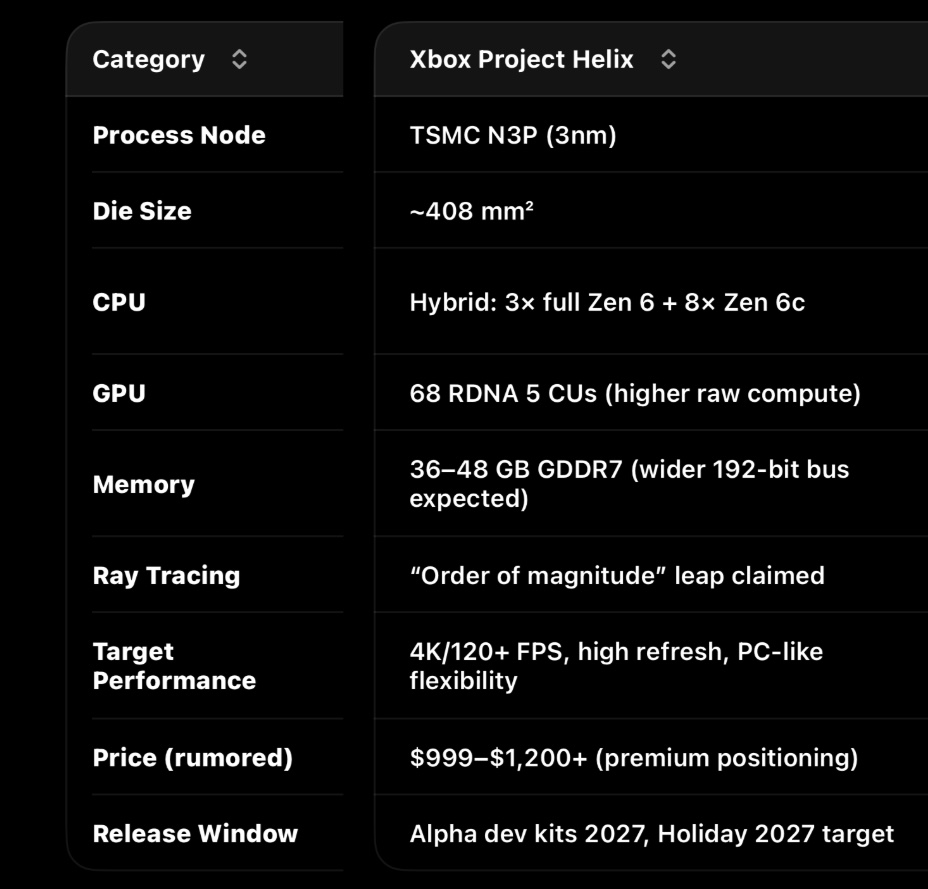
Sources: Wccftech roundup (May 2026), Moore’s Law is Dead & Kepler_L2 leaks, Digital Foundry analysis, official Xbox GDC 2026 statements.
Key Differences in Philosophy & Experience
Project Helix (Xbox)
- Hybrid console-PC device: Officially designed to play both Xbox console games and PC games (Steam, etc.).
- Unified development — one build works on console + Windows via new GDK tools.
- “Xbox Mode” on Windows 11 for a console-like experience on PC.
- Massive backward compatibility (all previous Xbox generations).
- Focus on raw power + flexibility — unlocked frame rates, high refresh rates, PC-style settings, and future AI features (NPU mentioned in leaks).
- Microsoft’s vision: Keep the Xbox audience while pulling in PC gamers who want console simplicity without losing their libraries.
- More expensive because it’s packing serious silicon and targeting enthusiasts.
PlayStation 6 (Sony)
- Traditional closed-ecosystem console focused on the living room.
- Strong emphasis on first-party exclusives (Sony has reportedly pulled back from day-one PC ports to protect this).
- Hardware optimized specifically for console gaming (similar to how PS5 sometimes punched above its weight vs Series X).
- Expected to be significantly cheaper and more accessible.
- Rumored handheld (“Project Canis”) in parallel — something Microsoft scrapped in favor of ASUS partnerships (ROG Xbox Ally).
- Digital Foundry’s take: Sony is refining the classic console formula rather than trying to compete directly on raw specs.
Performance Reality Check
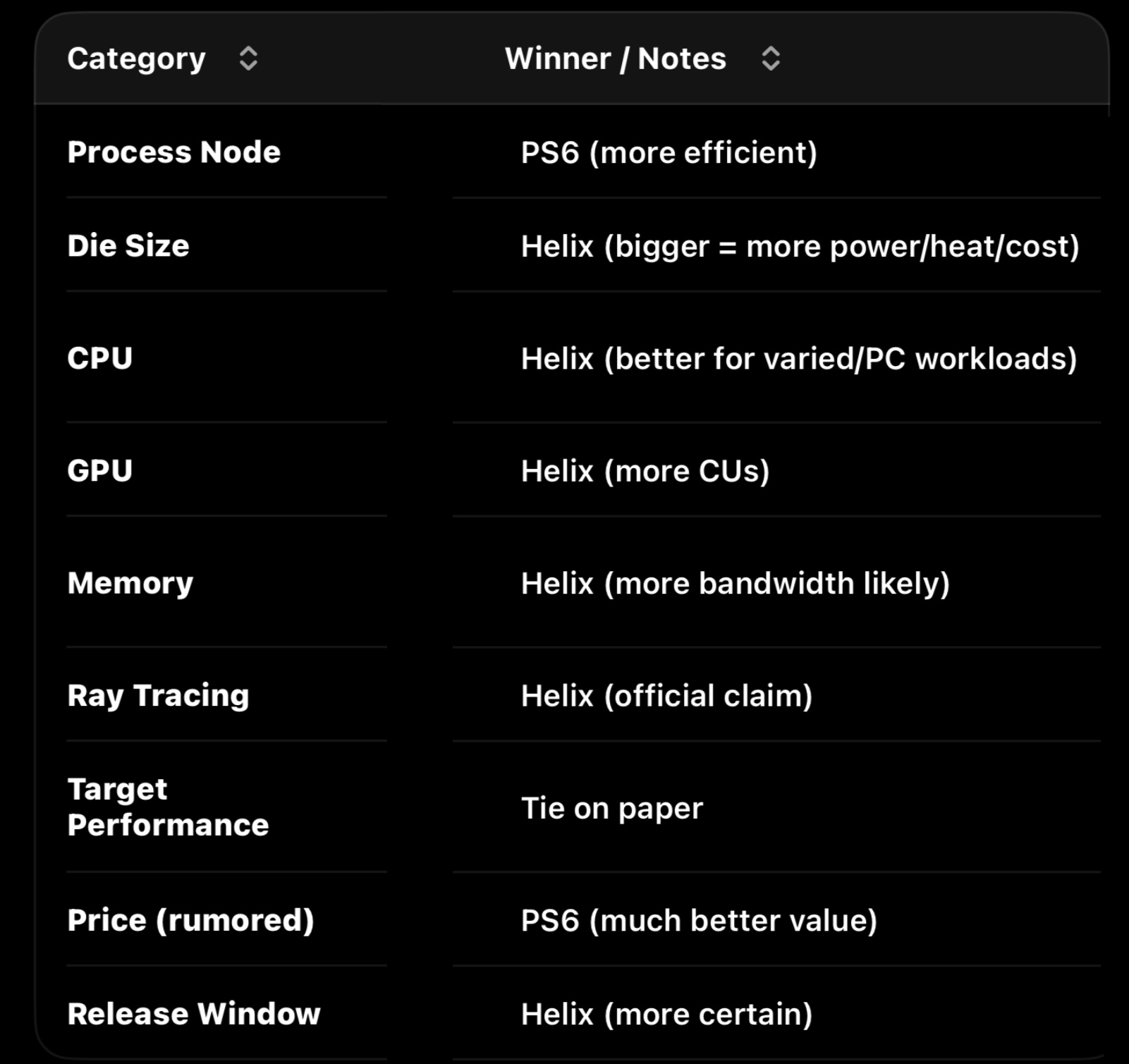
Leaks suggest Helix could be ~20-25% faster in raw terms (roughly RTX 5080-level vs PS6 ~5070 Ti territory).
However, Digital Foundry and others point out that with modern upscaling (PSSR 2.0 / FSR Next) and temporal reconstruction, the visible difference at TV distances will often come down to slightly higher internal resolutions or settings, not massive frame-rate gaps in most games.
Both will deliver excellent 4K/120 experiences with much better ray tracing than current gen.
Which One Should You Care About?
- Choose PS6 if you want: Best exclusives, value for money, simple plug-and-play console experience, and strong first-party storytelling.
- Choose Project Helix if you want: Maximum performance + flexibility, access to Steam/PC library on a console-like device, high refresh rates, and don’t mind paying a premium.
- Many analysts say this isn’t really a traditional “console war” anymore — they’re targeting overlapping but distinct audiences.
Bottom line (as of May 2026): Helix wins on paper specs and openness. PS6 is expected to win on price, optimization, and exclusive content.
The real winner for gamers will depend on whether you value ecosystem lock-in + polish (Sony) or power + freedom (Microsoft’s hybrid approach).
Both look like big generational leaps for visuals — perfect for high-quality esports, tournament, and promotional content creation.