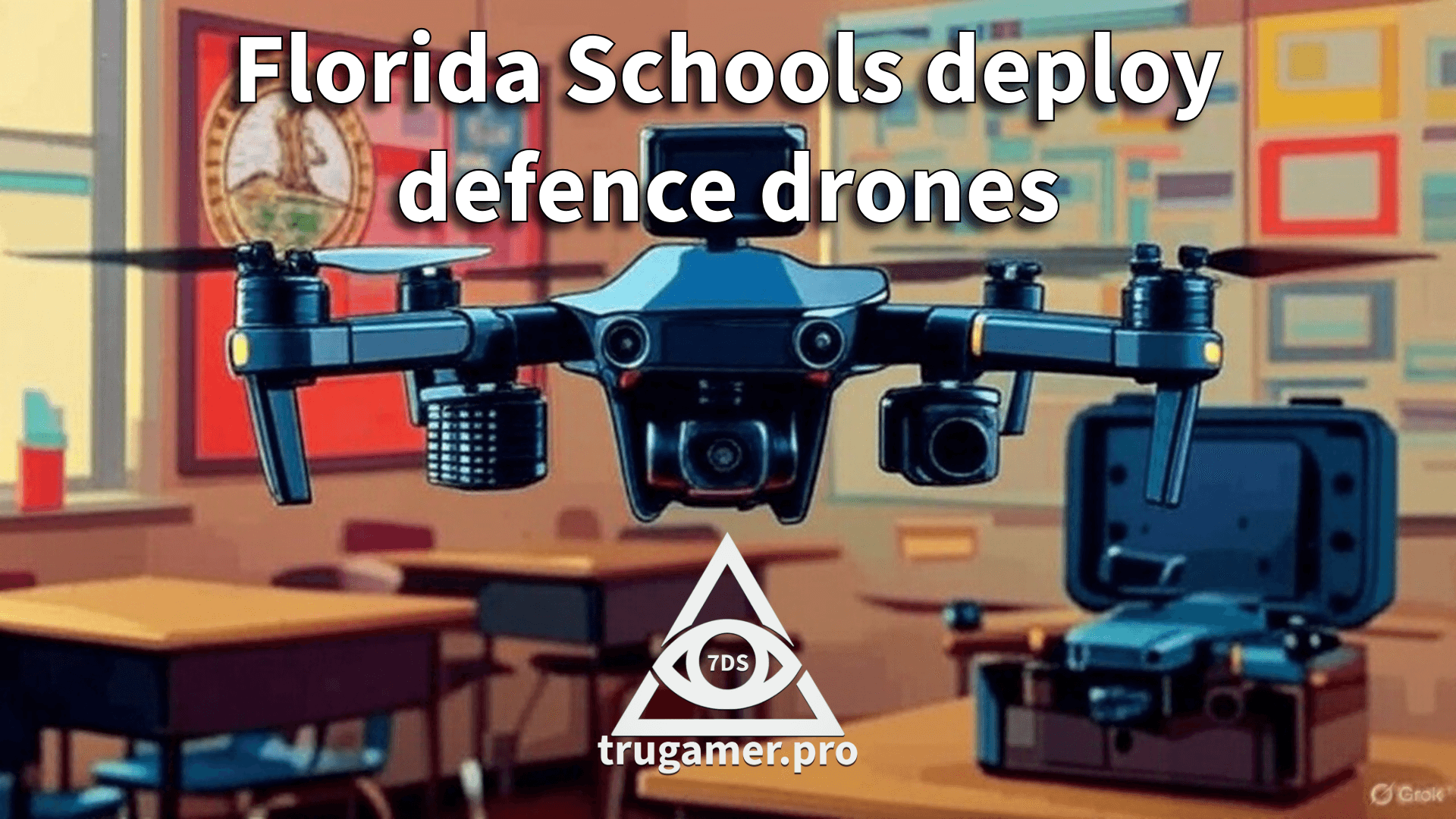
High-tech drones are being piloted in select Florida schools as a rapid-response tool to deter or neutralize active shooters, aiming to protect students during the critical first minutes of an incident when most fatalities occur.
The Technology: Campus Guardian Angel System
The initiative centers on the Campus Guardian Angel drone system, developed by a Texas-based company of the same name.
These are small, remotely piloted drones equipped with non-lethal deterrents, including:
- Pepper spray pellets (or "powder pellets") for disorienting and incapacitating a shooter.
- "Kinetic energy hits" to physically knock down or distract the target.
- Audio sirens for psychological disruption.
- Specialized attachments like glass breakers to access locked rooms or windows.
- Live video feeds for real-time situational awareness, helping law enforcement assess threats without immediate entry.
Drones are stored in secure, on-site charging boxes (each holding up to six units) strategically placed throughout a school—typically 3–15 boxes per campus, depending on size (e.g., 18 drones for a small elementary, up to 90 for a large high school).
Upon activation via a silent alarm, elite pilots (including former military, police, and drone racing champions) in an Austin operations center take control, using pre-loaded digital school maps to deploy the nearest units.
Key performance claims:
- Deployment: 5 seconds from alarm.
- Engagement: Reach the shooter in 15 seconds (cruising at 30–50 mph indoors, up to 100 mph outdoors).
- Neutralization: Subdue the threat within 60 seconds, buying time for human responders (who often arrive in 5–11 minutes, as seen in past incidents).
The system is designed to "distract, delay, and deny" rather than replace police, with demonstrations showing drones evading simulated gunfire (e.g., paintballs) and ramming targets like MMA dummies.
Pilot Program Details
Florida is leading the U.S. in state-funded testing of this tech, with $557,000 allocated in the 2025–2026 state budget, approved by Gov. Ron DeSantis. The Florida Department of Education (DOE) is selecting three school districts for the pilot, with an announcement expected by late November 2025. Installations are slated for September–October 2025, and full live operations could begin as early as January 2026.
Demonstrations have already occurred at:
- Leon County Schools District Security Center (Tallahassee).
- AcadeMir Preparatory High School (Miami-Dade County).
Costs for schools: About $1,000/month for a 500-student campus (or $4–$8 per student), with each box of six drones at $15,000 upfront. Similar systems are in early talks for Colorado, Virginia, and Texas, but Florida is first with public funding.
Why Now? Florida's School Shooting Context
This push follows Florida's high incidence of school violence: Over 60 incidents since the 2018 Parkland shooting at Marjory Stoneman Douglas High School, where 17 died and response delays highlighted vulnerabilities (e.g., the school resource officer hesitated, and deputies arrived after 11 minutes). A recent April 2025 shooting at Florida State University killed two, affecting Parkland survivors. Proponents, including Parkland parent Max Schacter (who lost his son), argue drones act like "modern sprinkler systems"—pre-positioned for instant action without relying solely on human speed.
### Potential Concerns and Criticisms
While innovative, the program has sparked debate:
- Effectiveness Risks: Drones have a 12–15 minute flight time, and malfunctions or misidentification could escalate chaos. Past tech like AI gun detectors has failed in real tests.
- Ethical/Privacy Issues: Arming schools with 30–90 surveillance-capable drones raises surveillance fears; critics liken it to dystopian sci-fi (e.g., Cyberpunk or RoboCop).
- Unintended Consequences: Could shooters become more erratic if "hunted" by drones? Or lead to "suicide by drone" scenarios?
- Equity and Adoption: High costs may burden smaller districts without grants; private/charter schools are adopting faster.
Supporters counter that in the first 120 seconds of a shooting—when 80–90% of deaths happen—this tech could save lives without lethal force. The pilot will evaluate scalability, with results potentially influencing national policy.
For more, check the Florida DOE for district announcements or Campus Guardian Angel's site for demos. This represents a bold, tech-driven evolution in school safety amid ongoing gun violence debates.