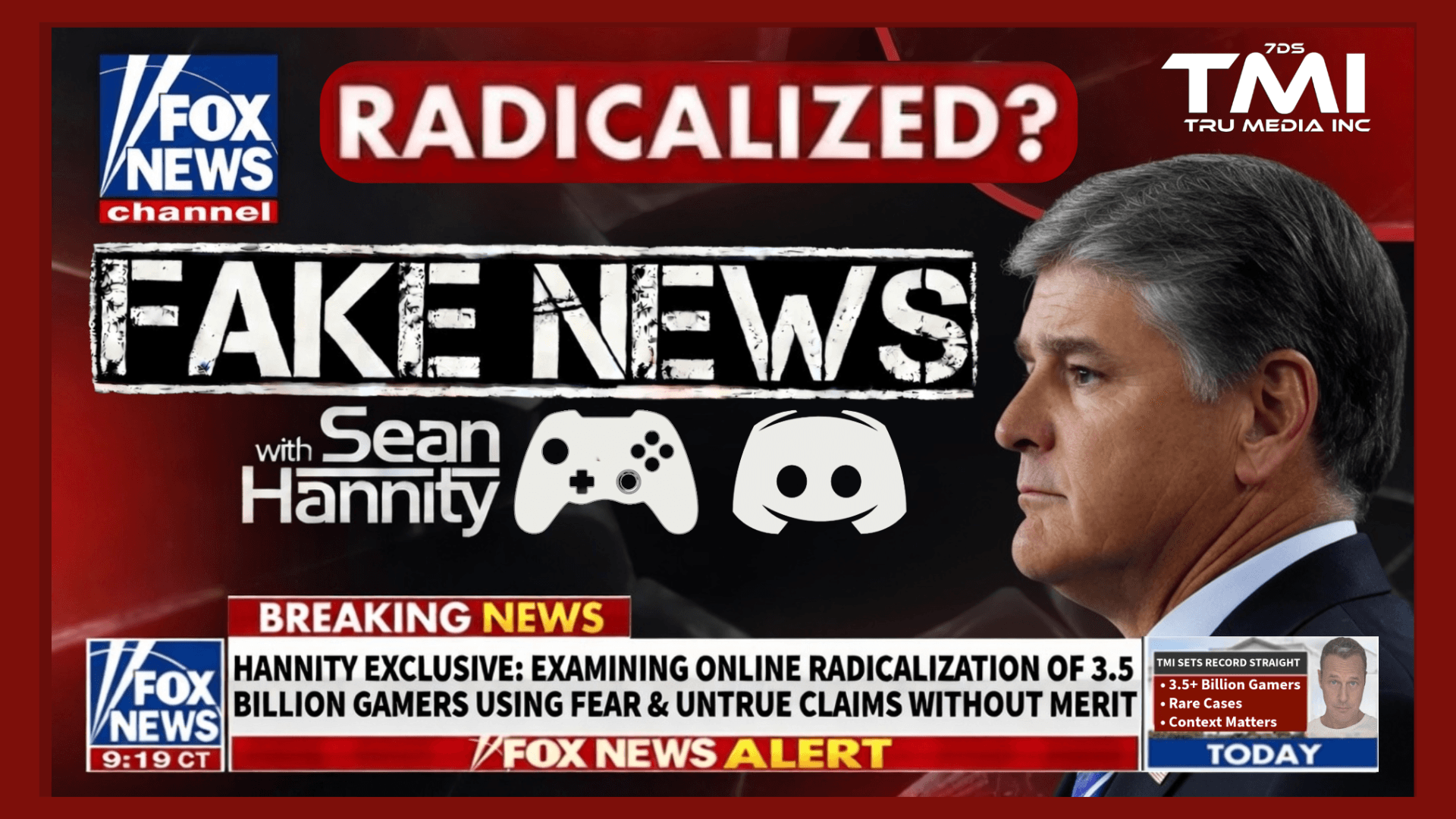
Gaming’s Reality Check: Why Broad Claims Tying Online Gamers and Discord to Hate and Murder Recruitment Fall Short
A new Fox Nation documentary, Radicalized: with Sean Hannity, has drawn attention for examining how isolation, online echo chambers, and grievance-driven content contribute to youth radicalization and acts of political violence.
The special highlights high-profile cases, including the assassination of conservative activist Charlie Kirk by Tyler Robinson—who reportedly used Discord to communicate about plans—and other incidents involving individuals influenced by toxic online spaces.
Coverage and related reporting have referenced platforms like Discord and gaming-adjacent spaces as part of the digital ecosystem where extremists sometimes operate.
This has fueled discussion—and concern—about whether online gaming communities are being systematically exploited as pipelines for hate and violence.
The evidence shows a more nuanced picture.
While real risks exist in specific corners of the internet, painting the broader world of online gamers and Discord users as a primary recruitment ground for murder and extremism is a significant overreach that ignores scale, context, and the actual data.
The Scale of Gaming vs. Isolated Incidents
Video games are no longer a niche hobby.
Global estimates place the number of active video game players worldwide at approximately 3.3 to 3.6 billion people in 2025–2026—more than 40% of the global population.
The industry generates hundreds of billions in revenue annually, supports professional esports leagues, content creators, and major events, and serves as a primary social outlet for millions across demographics, ages, and backgrounds.
Within this massive ecosystem, Discord alone hosts millions of servers—most focused on game coordination, friend groups, study communities, music, art, and esports.
The platform has explicit policies against hate speech, violent extremism, and harmful conduct, and it maintains a Trust & Safety team that removes violating content and cooperates with law enforcement.
Documented cases exist where extremists across ideologies (far-right, far-left, jihadist, and others) have used gaming platforms, in-game chats, livestreaming tools, and Discord for propaganda, networking, planning, or limited recruitment attempts.
Researchers tracking violent extremism have noted these vectors for years.
Specific incidents, such as perpetrators using Discord in planning or communication, are serious and deserve scrutiny.
However, these remain rare outliers relative to the billions of gaming interactions that occur daily without incident.
Most young people who play games—including those who use Discord—never encounter or engage with extremist content, let alone get recruited into violence.
Research on Games, Aggression, and Real-World Violence
Meta-analyses of violent video game research consistently find small associations with short-term increases in aggressive thoughts, feelings, or lab-measured behaviors.
Effect sizes are typically modest. Major reviews, including those referenced by the American Psychological Association, have found insufficient evidence to establish a causal link between playing violent games and committing serious real-world violence or criminal acts.
Experts who study extremism recruitment note that while some groups experiment with gaming-themed propaganda or approach players on game-adjacent platforms, gaming itself is not a reliable or primary driver of radicalization into terrorism.
Personal vulnerabilities—mental health challenges, social isolation, family issues, exposure to targeted ideological content across multiple platforms (not just games), and real-world grievances—play far larger roles.
Blaming gaming broadly echoes past moral panics over comic books, heavy metal, Dungeons & Dragons, and rap music. Each time, the data showed the vast majority of participants were unaffected, while a tiny minority with pre-existing issues were drawn to darker corners.
The Real Online Radicalization Landscape
Radicalization happens across the digital spectrum: encrypted apps, mainstream social media, forums, video platforms, and private servers. Singling out gamers or Discord creates a misleading spotlight.
Platforms like Discord have improved moderation tools, age-gating, and reporting systems.
Gaming companies and communities have invested in safety features, codes of conduct, and initiatives promoting inclusivity and positive engagement.
Esports has matured into a professional, sponsored industry with standards around behavior and toxicity.
Communities focused on women in gaming, diverse participation, and competitive integrity actively push back against hate.
These efforts reflect a hobby and industry that, for most participants, fosters teamwork, skill development, creativity, and connection—especially valuable during periods of isolation.
Context Matters More Than Headlines
The Radicalized documentary raises important questions about how online culture, mental health, family supervision, and ideological content interact in tragic cases.
Those conversations are necessary. Parents, platforms, educators, and policymakers should continue working on digital literacy, mental health support, and effective moderation without compromising free expression or over-policing benign spaces.
What does not serve public understanding is reducing a diverse, mainstream activity enjoyed by billions to a simplistic narrative of “gamers being recruited into hate and murder groups.”
That framing stigmatizes millions of ordinary people—students, professionals, families, and competitors—who use these platforms for entertainment, friendship, and community.
It also distracts from the multifaceted drivers of extremism that demand more precise attention.
The truth is less sensational but more accurate: Online spaces carry risks, as does any powerful communication tool.
Gaming communities are not immune, but they are also not defined by the worst actors who occasionally exploit them.
The overwhelming reality is one of normal people playing games, building friendships, competing, creating, and living their lives—far removed from the fringes highlighted in any single documentary or news cycle.
Vigilance without hysteria, and facts without fear-mongering, remain the better path forward.