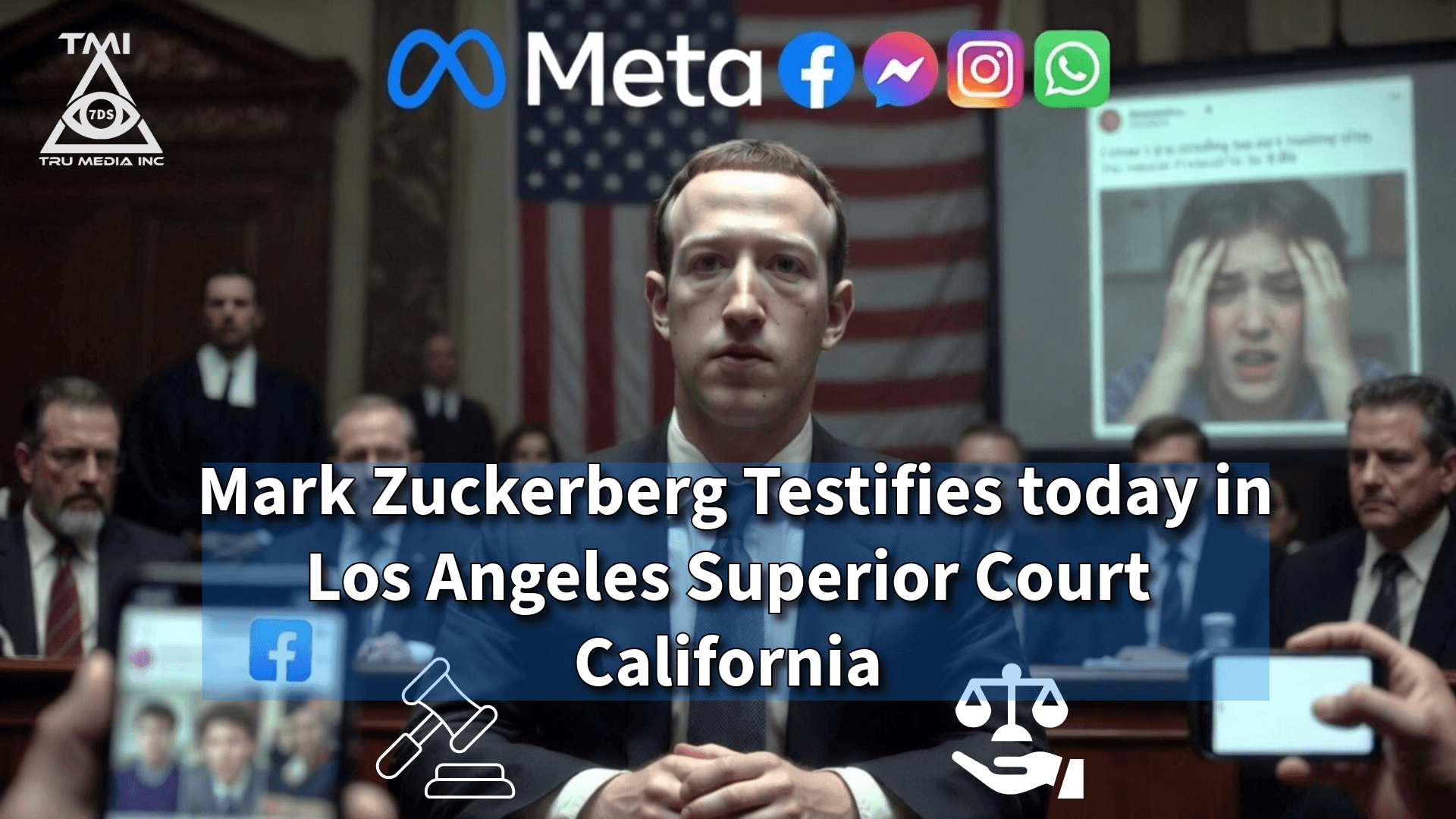
Mark Zuckerberg, CEO of Meta (formerly Facebook), testified today (February 18, 2026) in a landmark civil trial at Los Angeles Superior Court in California.
The case is a high-profile lawsuit accusing Meta (and other social media companies like Google's YouTube) of deliberately designing their platforms to be addictive, particularly to children and teens, leading to harms like mental health issues, anxiety, body dysmorphia, self-harm, and in some claims, suicidal thoughts.
Key Details from the Testimony and Trial:
- This marks Zuckerberg's first time testifying in front of a jury on these child safety and addiction allegations (he's previously testified before Congress).
- The plaintiff is a 20-year-old California woman (identified as K.G.M.
in court documents due to her minor status at the time), who alleges she began using Instagram at age 9 and that it contributed to severe mental health damage.
- Zuckerberg defended Meta vigorously, denying that the company sets goals to maximize "time spent" on platforms or intentionally addicts young users.
- He stated that Meta no longer pursues screen time maximization as a goal, has implemented safety features, and that users under 13 are not allowed on Instagram (though enforcement is challenging because people lie about their age).
- He pushed back against suggestions that he misled Congress on platform design and described Meta's approach to youth safety as "reasonable."
- Lawyers grilled him on topics like underage users, internal complaints about age verification, beauty filters' effects, and past engagement strategies.
- Zuckerberg appeared "pugnacious" or "combative" at times during questioning, according to some reports.
Broader Context:
- This is considered a "bellwether" trial—the first in a wave of over 1,000+ coordinated lawsuits (including from families, school districts, and states) alleging social media addiction harms youth.
- It's been compared by some to "Big Tobacco" moments for the tech industry, potentially reshaping liability for social media companies.
- Meta and other defendants deny the claims, pointing to safety tools and research showing platforms aren't inherently addictive like cigarettes or gambling.
The trial is ongoing and involves multiple parties (including Meta and Google/YouTube).
For the latest developments, check sources like the Los Angeles Times, CNN, BBC, AP News, or The New York Times, which have been covering it extensively today.