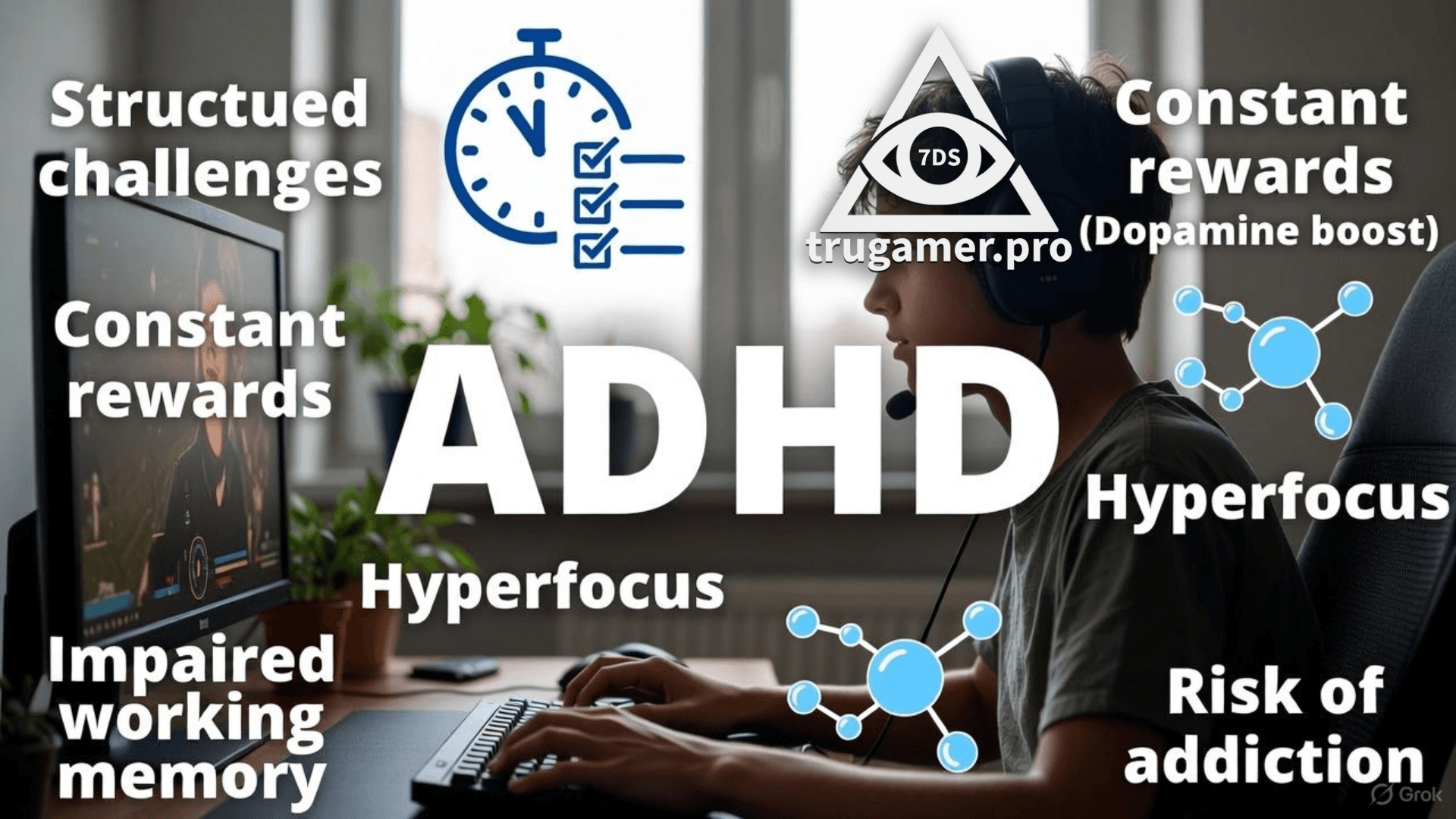
On one hand, games often provide structured, engaging environments that can help with focus and skill-building. On the other, people with ADHD may be more susceptible to excessive gaming, which can worsen symptoms like impulsivity or lead to addiction-like behaviors.<grok:render card_id="300945" card_type="citation_card" type="render_inline_citation">
<argument name="citation_id">13</argument>
</grok:render><grok:render card_id="6f6a53" card_type="citation_card" type="render_inline_citation">
<argument name="citation_id">8</argument>
</grok:render> This isn't a one-size-fits-all scenario—effects vary by person, game type, and play duration.
Potential Benefits
Video games can be a tool for managing ADHD symptoms:
- **Improved Focus and Attention**: Games with clear goals and rewards can help channel hyperfocus, a common ADHD trait, into productive tasks. For example, they may enhance executive functioning skills like planning and problem-solving.<grok:render card_id="ca963c" card_type="citation_card" type="render_inline_citation">
<argument name="citation_id">16</argument>
</grok:render>
- **Cognitive Training**: Some studies indicate games can build skills in areas like manual dexterity, cognitive flexibility, and even social interaction in multiplayer settings. Therapeutic games or apps designed for ADHD (e.g., those mimicking cognitive behavioral therapy) show promise as non-medication aids.<grok:render card_id="4bc0bc" card_type="citation_card" type="render_inline_citation">
<argument name="citation_id">13</argument>
</grok:render>
- **Stress Relief and Motivation**: The immediate feedback in games can boost dopamine levels, which are often lower in ADHD brains, making them feel rewarding and motivating.<grok:render card_id="d74c76" card_type="citation_card" type="render_inline_citation">
<argument name="citation_id">16</argument>
</grok:render>
Personal anecdotes support this: One user shared how role-playing games like Assassin's Creed helped with cognitive health during recovery periods, providing a paced activity that's more engaging than reading when focus is low.<grok:render card_id="ffcb94" card_type="citation_card" type="render_inline_citation">
<argument name="citation_id">1</argument>
</grok:render> Another noted that games offer structured challenges that translate to real-life skills for those with ADHD.<grok:render card_id="1512a4" card_type="citation_card" type="render_inline_citation">
<argument name="citation_id">0</argument>
</grok:render>
Potential Risks
While gaming isn't proven to cause ADHD, excessive play can amplify challenges:
- **Addiction and Overuse**: ADHD is a significant risk factor for gaming disorder, where individuals struggle to control playtime, sometimes leading to 14+ hours daily. This can result in social withdrawal, family conflicts, or neglecting responsibilities.<grok:render card_id="cc6701" card_type="citation_card" type="render_inline_citation">
<argument name="citation_id">8</argument>
</grok:render><grok:render card_id="b43576" card_type="citation_card" type="render_inline_citation">
<argument name="citation_id">5</argument>
</grok:render><grok:render card_id="0229e3" card_type="citation_card" type="render_inline_citation">
<argument name="citation_id">14</argument>
</grok:render> A systematic review found strong associations between ADHD symptoms and problematic gaming.<grok:render card_id="df35b5" card_type="citation_card" type="render_inline_citation">
<argument name="citation_id">12</argument>
</grok:render>
- **Worsened Symptoms**: Too much gaming may increase impulsivity, reduce self-control, and mimic or exacerbate ADHD-like attention issues. It can also disrupt sleep, leading to insomnia, anxiety, or depression.<grok:render card_id="7f23e7" card_type="citation_card" type="render_inline_citation">
<argument name="citation_id">9</argument>
</grok:render><grok:render card_id="8a102a" card_type="citation_card" type="render_inline_citation">
<argument name="citation_id">15</argument>
</grok:render><grok:render card_id="780daf" card_type="citation_card" type="render_inline_citation">
<argument name="citation_id">17</argument>
</grok:render> In kids, heavy gaming has been linked to behavioral health risks, including aggression or sedentary habits.<grok:render card_id="449edd" card_type="citation_card" type="render_inline_citation">
<argument name="citation_id">10</argument>
</grok:render><grok:render card_id="d5f6b3" card_type="citation_card" type="render_inline_citation">
<argument name="citation_id">11</argument>
</grok:render>
- **Opportunity Cost**: Time spent gaming might replace activities that build other developmental skills, potentially hindering growth in areas like academics or physical exercise.<grok:render card_id="86ab44" card_type="citation_card" type="render_inline_citation">
<argument name="citation_id">17</argument>
</grok:render>
From social media, some with ADHD report struggling to even start games due to low energy or quick loss of interest, turning a potential hobby into a source of frustration.<grok:render card_id="7f1737" card_type="citation_card" type="render_inline_citation">
<argument name="citation_id">4</argument>
</grok:render><grok:render card_id="c41f6f" card_type="citation_card" type="render_inline_citation">
<argument name="citation_id">2</argument>
</grok:render> Others observe that modern games appeal more for sensory stimulation (sounds, lights) than deep engagement, which might not benefit long-term focus.<grok:render card_id="ff2624" card_type="citation_card" type="render_inline_citation">
<argument name="citation_id">3</argument>
</grok:render>
Tabletop Gaming and ADHD
Beyond video games, tabletop role-playing games like Dungeons & Dragons (D&D) can be particularly ADHD-friendly or challenging. They encourage creativity and social skills but may vary by session length—some players hyperfocus for hours, while others struggle with extended play.<grok:render card_id="215603" card_type="citation_card" type="render_inline_citation">
<argument name="citation_id">6</argument>
</grok:render>
Tips for Balanced Gaming with ADHD
- Set time limits using apps or timers to prevent overuse.
- Choose games with educational or therapeutic elements, like puzzle or strategy titles.
- Combine gaming with breaks, exercise, or mindfulness to mitigate risks.
- If gaming feels compulsive, consult a healthcare professional—therapy or medication can help manage both ADHD and potential addiction.
Overall, moderation is key. Gaming can be a helpful outlet for many with ADHD, but monitoring habits ensures it doesn't become counterproductive. If you're dealing with this personally, resources like ADHD coaching or support groups can provide tailored advice.