For four months the Department of War has been dumping declassified UAP files onto war.gov/UFO — grainy sensor video, FBI orb reports, triangle renderings, pilot statements, case files from the 1950s straight into 2026.
Five official releases. More than a billion hits. And the next tranche is already in the pipeline.
The country is not waiting for a press conference. It is hitting play.
This is not a rumor cycle. This is a public archive.
The August drop mixed Pentagon, FBI, CIA, State Department, and White House records: 1950s film analysis from Montana and Utah, a 2002 Afghanistan triangle a military pilot said blocked out the stars, Colorado Springs “dark triangle” sketches, western U.S. red-light clusters from 2026.
Some objects still sit in the unresolved column after radar and flight-log checks. That gap — the part nobody can close — is the part people cannot stop watching.
Hollywood has been war-gaming first contact for 50 years
Close Encounters sold wonder.
Contact sold faith versus science.
Arrival sold language as destiny. Invasion movies sold fear.
Each one answered a different version of the same question the files now put on a government website: we may not be alone — so what are they like?
This week the answer that is spreading fastest is not a mothership. It is a whisper.
Signal One is the movie that stares past the last planet
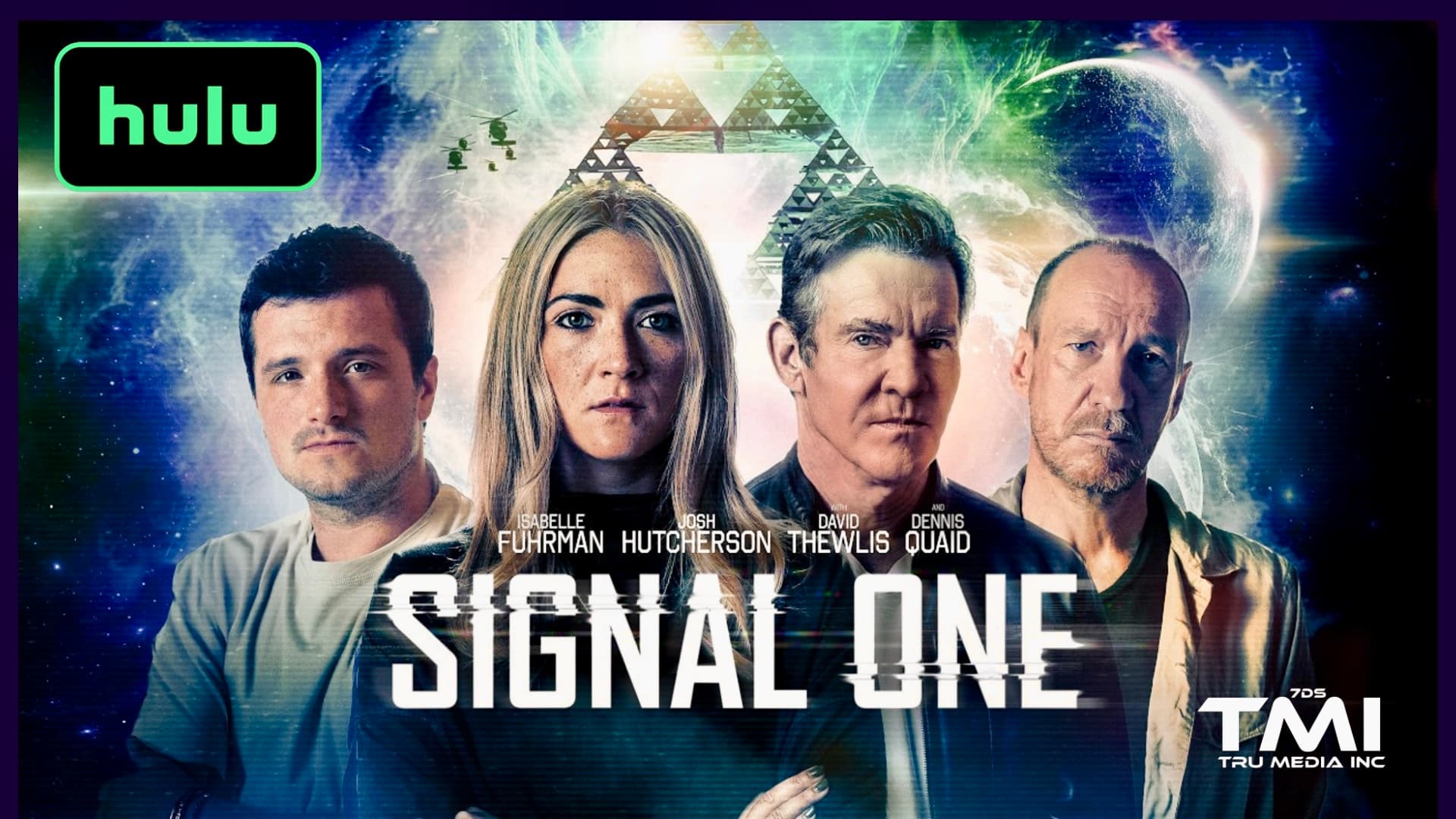
Streaming now on Hulu, Jonathan Sobol’s 87-minute sci-fi thriller stars Isabelle Fuhrman as Dr. Annika Kask, the computer scientist who photographed dark matter and still wants more sky.
Dennis Quaid is the billionaire who pulls her to a private Caribbean island so Washington cannot interfere.
David Thewlis is the nihilistic genius who built LITTLEMOUTH — a machine designed to listen to alien chatter already moving through the cosmos, then talk back.
Josh Hutcherson is the engineer who helps throw the switch.
The scene that is living in group chats is a child’s question.
Young Annika’s sister looks up and asks, “What’s past the last planet?” Annika says: “Infinity.”
That is the film’s whole thesis. LITTLEMOUTH does not deliver cute visitors.
It suggests other minds are already speaking around us — and that we may be too primitive to understand the message.
When the team stops listening and starts transmitting, first contact stops being a discovery and becomes a consequence.
That is why the timing feels radioactive. The war.gov files show objects.
Signal One asks what those objects might mean if the intelligence behind them is not a neighbor with a better engine — if it is closer to infinity than to a species.
Fuhrman plays the scientist who will chase the answer even if it unmakes her.
Quaid plays the rich man who treats first contact like a product launch.
Thewlis plays humanity like a species that should think twice before shouting into the dark.
Together they turn a lean chamber piece into the unofficial companion film to the government’s own archive.
The hype is the overlap
The Pentagon keeps saying many of the released materials have not been resolved.
Hollywood keeps filling the silence. Invasion.
Diplomacy.
Gods.
Math.
Signal One belongs to the last camp — and that is the version that matches 2026.
The files are public.
The analysis is incomplete.
The hits keep climbing.
And a movie that used to look like a quiet Canadian-American sci-fi now plays like the briefing that went off the record.
Watch the files at war.gov/UFO.
Watch the theory on Hulu.
The next government drop has no date. The question already does: if something is talking, and we finally talk back — what happens past the last planet?