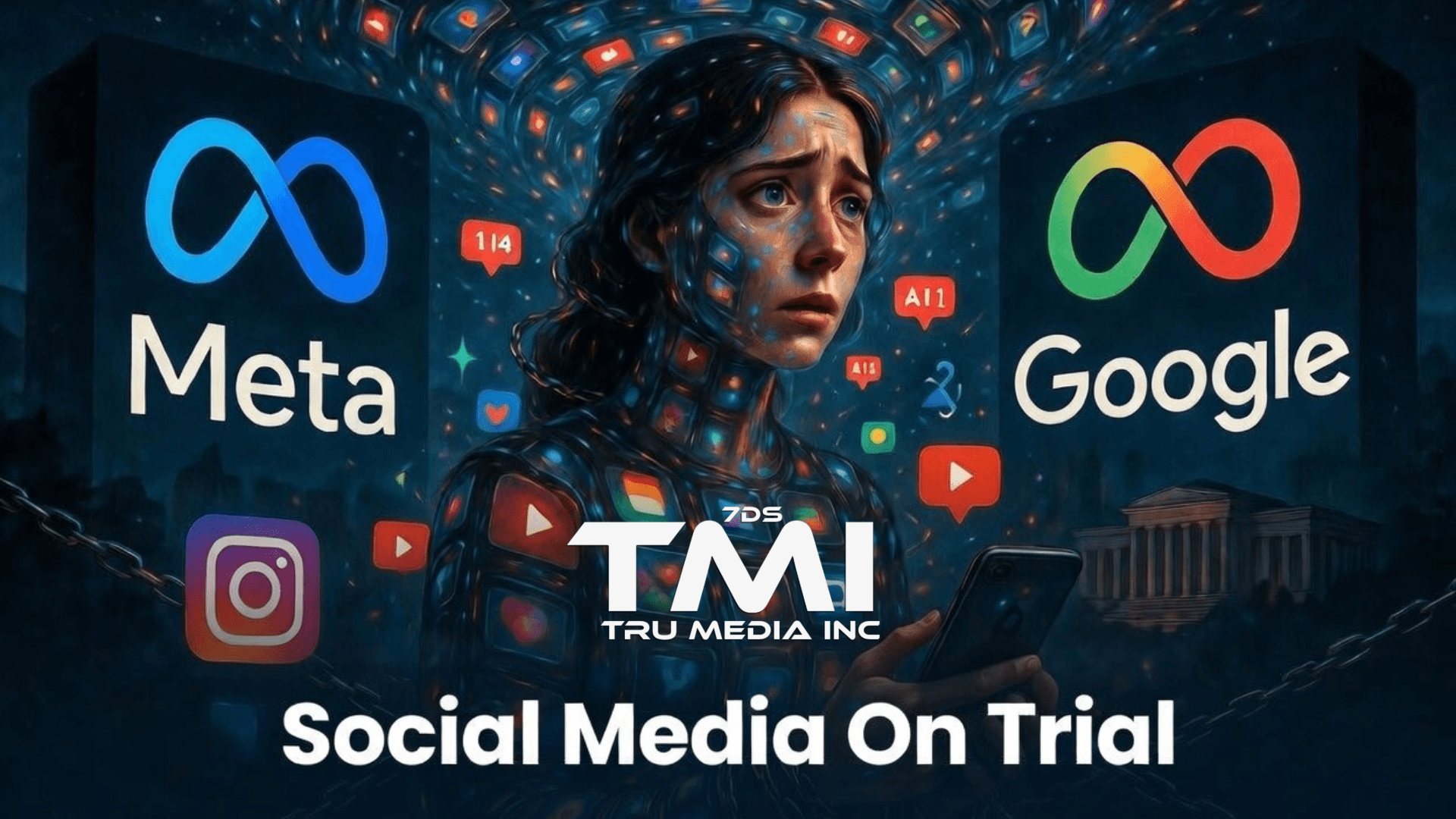
The landmark "social media addiction" bellwether trial (K.G.M. v. Meta Platforms and Google) is underway in Los Angeles Superior Court.
A 20-year-old woman (referred to as Kaley or K.G.M.) alleges that Instagram (Meta) and YouTube (Google) deliberately engineered addictive features—such as infinite scroll, autoplay, push notifications, and variable-reward algorithms—that hooked her as a child (starting at age 6 on YouTube and 9 on Instagram).
She claims this led to up to 16 hours of daily usage, cyberbullying, body dysmorphia, severe anxiety, depression, and suicidal thoughts that her family and therapists say would not have occurred without the platforms.
TikTok and Snapchat settled with her before trial for undisclosed amounts.
This case is the first of its kind to reach a jury and serves as a test (bellwether) for thousands of similar lawsuits filed nationwide by other children, parents, and school districts claiming the same harms.
Closing arguments wrapped up around March 11–13, 2026.
The 12-person jury began deliberating shortly after and, as of the latest reports, is still deliberating (jurors sent notes to the judge on the first day; no final verdict has been publicly reported as of March 17, 2026).
What "the jury finds them guilty" actually means (it's a civil case)
This is not a criminal trial, so there is no "guilty" verdict in the criminal sense—no jail time, no government fines from this case alone. Instead:
- The jury decides two main things for each company separately:
1. Were Meta and/or Google negligent in designing their platforms (i.e., did they know the addictive features would foreseeably harm kids but keep them anyway)?
2. Was that negligence a "substantial factor" in causing the plaintiff's specific harms?
- If the jury says yes (at least 9 of 12 jurors must agree), the companies are liable (what people casually call "guilty").
- Then the same jury decides damages—how much money the plaintiff receives for medical costs, emotional suffering, "lost childhood," etc.
Meta's defense: The plaintiff had pre-existing family issues; her problems would have happened without Instagram; therapists never blamed social media; and the company has safety tools.
Google's (YouTube) defense: It's more like TV than social media and doesn't use the same addictive social-validation tricks.
What happens immediately if the jury finds Meta and/or Google liable
- The plaintiff wins a payout (potentially millions, though exact amounts vary).
- The companies will almost certainly appeal (this could drag on for years), but the verdict would stand unless overturned.
- Meta and Google would face enormous pressure to settle the other pending cases quickly rather than risk more jury trials.
What happens nationwide (the big picture)
This is the first jury trial ever on whether social-media design choices (not just user posts) can make companies liable.
A win for the plaintiff would be described by experts as "Silicon Valley's Big Tobacco moment."
Here's the nationwide ripple effect:
- Precedent for thousands of other cases — Over 2,000 similar lawsuits are pending (many consolidated in multidistrict litigation).
A verdict here makes it far easier and cheaper for those families to win or force settlements.
Total potential liability for Meta and Google could reach billions of dollars across all cases.
- Platform changes across the U.S. — To reduce future risk, Meta and Google would likely roll out nationwide defaults for minors: stricter time limits, no infinite scroll/autoplay for under-18 users, better parental controls, addiction warnings, or algorithm tweaks.
These changes affect every American kid using Instagram or YouTube, not just California.
- Political and regulatory pressure — A plaintiff win would turbo-charge calls in Congress and state legislatures for new federal laws (age verification, bans for under-13s or under-16s, mandatory safety audits).
More than 20 states already passed youth social-media laws; this verdict would accelerate that trend and make enforcement stricter.
- Even if the jury says "not liable" — The companies still face ongoing public/political heat, more trials, and pressure to improve safety features.
But a loss would be a historic breakthrough for accountability.
In short: A liable verdict wouldn't bankrupt Meta or Google overnight, but it would open the floodgates for massive settlements, force safer designs for America's kids, and likely trigger the biggest wave of tech regulation since the 1990s.
The case is being watched worldwide as the first real jury test of whether social media can be held responsible for addicting children.
Keep an eye on court updates in the coming days—a verdict could drop any time.
Sources (all links accessed/verified as of March 17, 2026):
- NBC NEWS
- BBC NEWS
- PBS
- NY Times
- Fortune
- Law.com
- Additional coverage from CBS News, WSJ, and AP reports via various outlets.