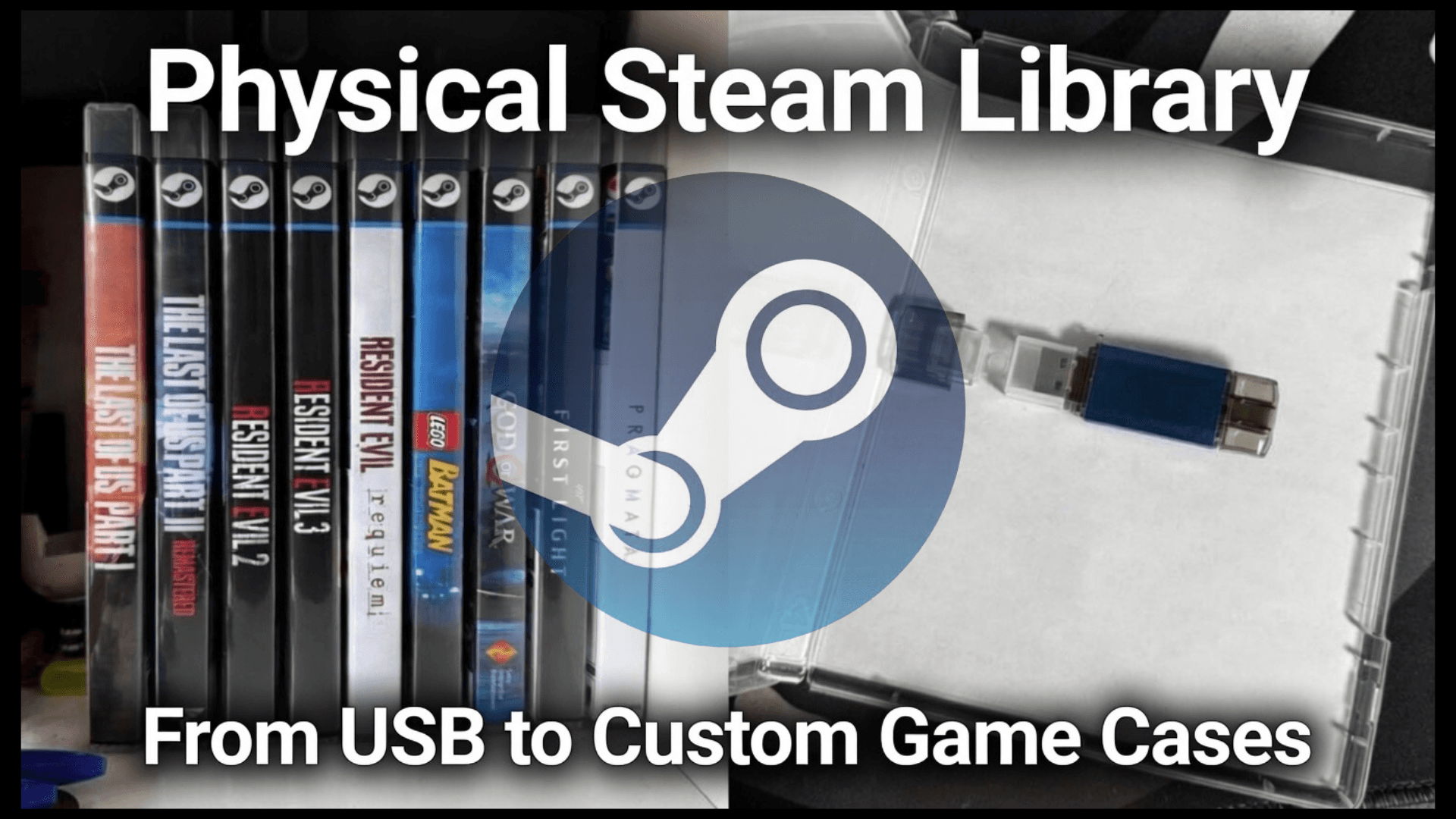
Redditor Turns Steam Library Into Physical Collection With Custom USB Cases and Retro Box Art
A Reddit user has gone viral for converting their digital Steam library into a tangible, shelf-ready game collection that looks like it belongs in a late-1990s PC store.
Instead of relying solely on Steam’s cloud or local hard drive installs, the user creates custom plastic cases for individual titles.
Each case holds a USB drive loaded with the game’s files or installers, paired with carefully designed cover art that mimics classic boxed PC games — the kind once sold at Babbage’s or Electronics Boutique.
The collection is limited to DRM-free titles (or versions that can run fully offline).
This ensures the games remain playable without needing Steam to be online, an active internet connection, or any authentication servers that could one day go dark.
Why It’s Catching On
Digital ownership has long carried an asterisk.
Buying a game on Steam grants a license rather than a permanent copy.
While Valve’s platform has proven remarkably stable, history shows that servers can shut down, licenses can be revoked, and games can vanish from storefronts.
Preservationists have repeatedly pointed out how easily digital titles can become unplayable when the supporting infrastructure disappears.
This project addresses that anxiety head-on. By putting the actual game data on physical media and pairing it with authentic-looking packaging, the Redditor has created something that feels like traditional ownership again.
Stack the cases on a shelf and the result looks like a time capsule from the peak of boxed PC gaming.
The attention to the cover art elevates the project beyond a simple backup solution.
The designs lean into the big typography, detailed illustrations, and overall aesthetic of late-’90s and early-2000s PC boxes, giving the collection genuine visual weight.
A Growing Conversation
The idea quickly spread after being highlighted on X by the account @Pirat_Nation, drawing tens of thousands of likes and widespread discussion.
Some users praised the dedication and nostalgia. Others debated the practicality of USB drives for long-term storage (noting that optical media or proper archival methods may last longer) and the realities of creating truly offline copies.
Similar DIY approaches have appeared before — including earlier experiments using external SSDs as “cartridges” that auto-launch games when plugged in — but the combination of retro packaging and a strict DRM-free rule has struck a particular chord in 2026.
In an era when many new releases are fully digital and cloud-dependent, one Redditor’s handmade physical archive is a quiet but pointed reminder: some players still want to own their games in a form they can hold.