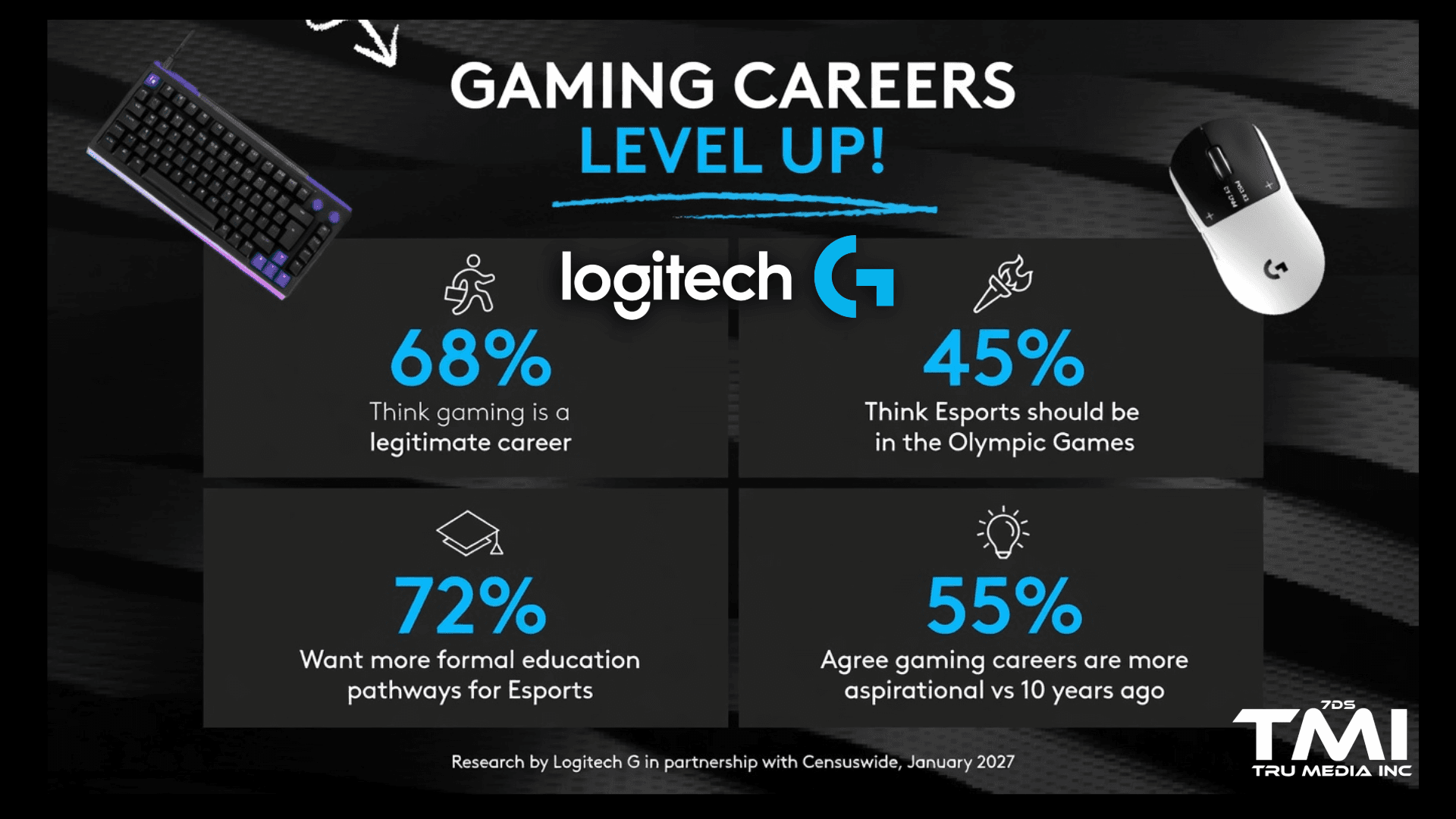

The Logitech G Survey (May 2026)
A major global study commissioned by Logitech G (conducted by Censuswide with ~18,000 respondents across countries including the US, UK, China, South Korea, Brazil, and others) was released around May 12–13, 2026.
It highlights growing public support for treating esports and professional gaming as legitimate careers — but with clear caveats around education and infrastructure.
Key findings:
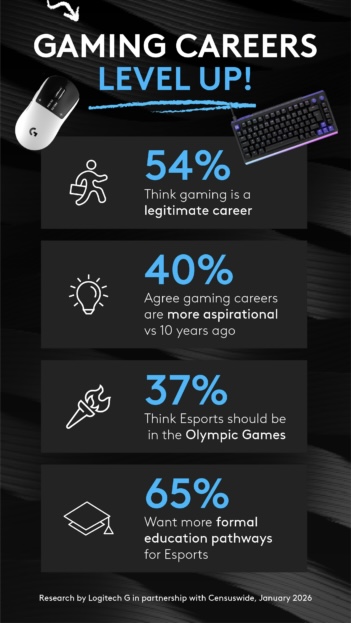
- 65% globally believe universities, colleges, and specialist institutions should offer formal education pathways for careers in esports and pro gaming.
- 54% now view professional gaming as a legitimate career path.
- 47% think schools should include esports classes alongside traditional sports programs.
- Support is strongest among younger people: 67% of Gen Z and 60% of Millennials back formal pathways and see gaming careers positively. Baby Boomers lag significantly at just 37% (China is a notable outlier, with higher acceptance even among older generations).
The survey also identified barriers and boosters:
- One in five people cite the lack of formal qualifications or education requirements as a reason professional gaming isn’t seen as a “real” career.
- To build acceptance, respondents pointed to better training facilities, more mainstream media coverage, greater transparency around player earnings (cited by 32%), and inclusion of esports in major global sports events (30%).
Logitech G’s takeaway: Continued
investment in training, facilities, and gaming technology is essential for the industry’s sustained growth.
Infrastructure & Sustainable Growth Conversations
This survey fits into wider industry discussions about moving esports beyond hype and short-term tournament wins toward long-term, sustainable ecosystems.
Common themes in current conversations include:
- Physical & Digital Infrastructure — Dedicated arenas, high-quality training facilities, reliable high-speed internet (including 5G and cloud gaming solutions), and accessible hardware. Many regions still struggle with latency, equipment costs, and venue access, which limits talent development and fan experiences.
- Talent Pipelines Beyond Playing — Education isn’t just for aspiring pros. It supports roles in coaching, game analysis, event production, content creation, marketing, data/analytics, mental performance coaching, and business operations. Formal programs help create clearer career ladders and reduce reliance on “grind or bust” paths.
- Financial & Career Longevity — Issues like player burnout, short career spans, and opaque earnings are frequently discussed. Education and structured pathways are seen as ways to build transferable skills, support post-playing careers, and attract investment by making the industry more professional and accountable.
- Regional & Global Equity — Emerging markets often highlight the need for government support, local tournaments, grassroots programs, and public-private partnerships. Successful models from places like South Korea and Saudi Arabia (heavy infrastructure investment) are frequently referenced as blueprints.
- Legitimacy & Mainstream Integration — Greater acceptance (as shown in the survey) is tied to treating esports more like traditional sports — with coaching structures, academic recognition, and integration into education systems. This helps with sponsorships, broadcasting deals, and long-term viability.
What People Are Saying Right Now
On X and in industry circles, you’ll see ongoing chatter about:
- Building real infrastructure for creator monetization and faster payouts in esports.
- Partnerships between tournament organizers and data/tech infrastructure providers.
- Web3/gaming tools that could power rewards, sponsorships, and instant transactions for players, streamers, and organizers.
- The need for scalable ecosystems that support not just elite competition but community growth and diverse job creation.
Education keeps coming up as a foundational piece — it’s viewed as one of the best ways to professionalize the space, attract new talent into non-playing roles, and give the industry staying power beyond any single game or hype cycle.
Why This Matters
The 65% figure (and especially Gen Z’s strong support) signals that public perception is shifting. Esports is no longer just “kids playing games” in the eyes of many — but turning that into sustainable careers and a robust industry requires deliberate investment in people development (education) and foundational systems (infrastructure).
Without these, growth risks remaining fragmented, with high burnout and limited pathways outside the very top tier of players.