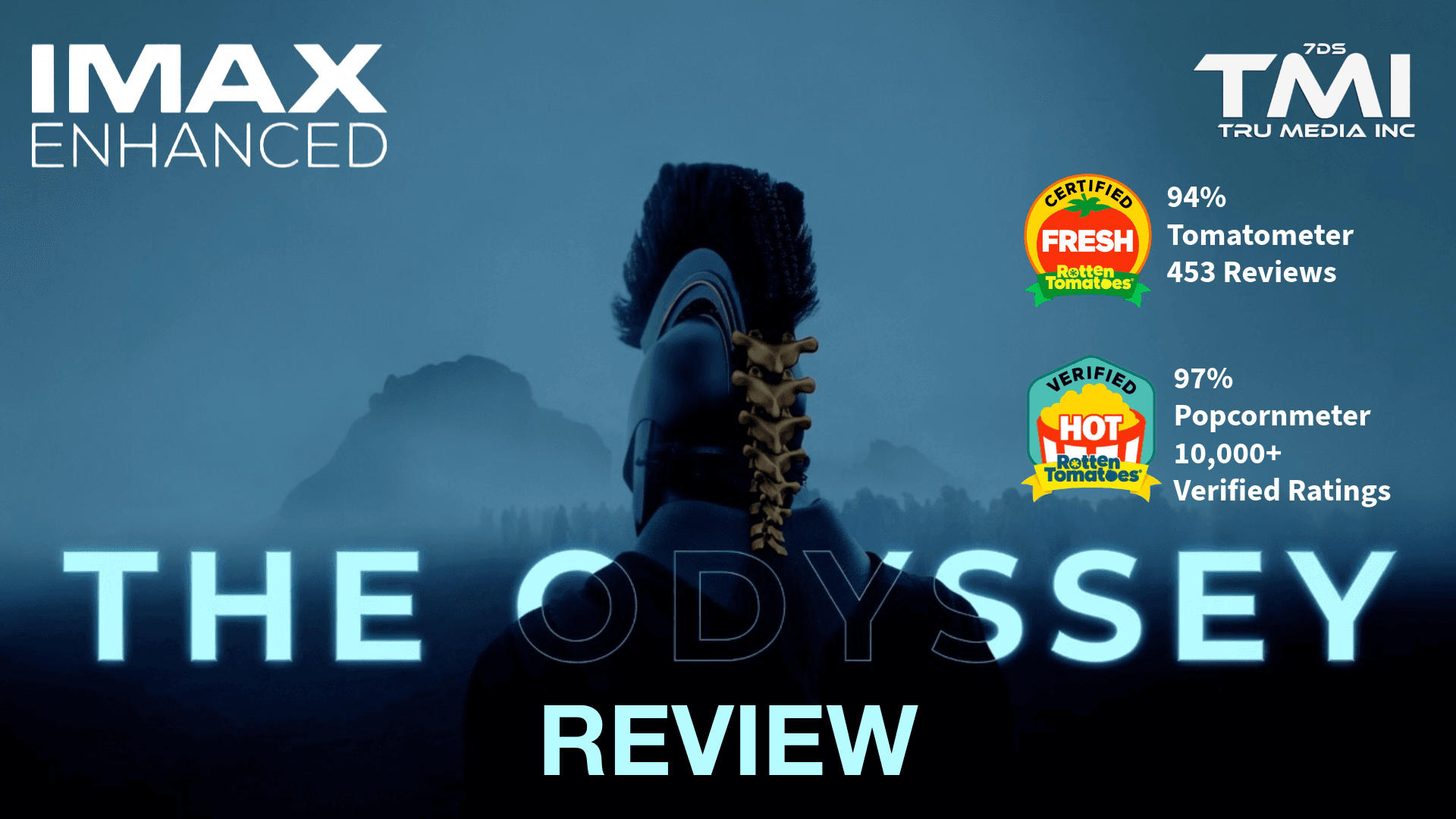
Christopher Nolan’s The Odyssey (2026) is widely praised as a towering, immersive epic that is best experienced in IMAX—especially true 70mm IMAX where available.
It is the first Hollywood feature shot entirely on IMAX film cameras (using new quieter “Keighley” cameras and sound-suppression “blimps” that enabled dialogue scenes).
Runtime is about 172 minutes; it is rated R. Matt Damon stars as Odysseus, with a stacked cast including Tom Holland, Anne Hathaway, Robert Pattinson, Lupita Nyong’o, Zendaya, and Charlize Theron. Cinematography is by Hoyte van Hoytema; score by Ludwig Göransson.
Critical Reception
Reviews are strongly positive. It ranks among Nolan’s highest-rated films (early Tomatometer figures in the mid-to-high 90s range across aggregators, with Metacritic scores in the high 80s).
Critics highlight the scale, practical-effects-driven set pieces (battles, sea voyages, mythical encounters), human depth, and pure cinematic spectacle that recalls classic Hollywood epics while feeling distinctly Nolan.
Common notes:
- Staggering visuals and immersion on the biggest screens.
- Strong performances and production design.
- Occasional critiques of the episodic structure (inherent to Homer), some casting/character choices, or a slightly aloof tone in quieter moments.
- The final act and large-scale sequences frequently called standouts.
The IMAX Experience
This is the core of the conversation. Because every frame was composed for the tall IMAX aspect ratio (roughly 1.43:1 in true 70mm presentations), the format delivers the full intended image, resolution, and presence.
Reviewers who compared formats consistently say true IMAX 70mm is transformative:
- The screen fills the field of view; landscapes, ships, battles, and close-ups feel enveloping rather than framed.
- Sound (weapons, storms, Göransson’s score) becomes physical and precise.
- Practical effects and texture gain extra impact; some sequences (e.g., transformations or large battles) feel more visceral.
True 70mm IMAX prints are limited (around 25 theaters in the US and roughly 40 worldwide).
Digital IMAX or standard large-format presentations are still excellent and widely recommended over ordinary screens, but they often crop the top/bottom of the frame.
Many reviewers note the film remains outstanding in other premium formats (70mm, Dolby, etc.), but urge seeking the fullest IMAX version if possible.
Bottom line from critics and format comparisons:
See it on the biggest screen you can. If a genuine IMAX 70mm screening is within reach, it is repeatedly described as worth the effort (or even a special trip). The movie was built for that experience.