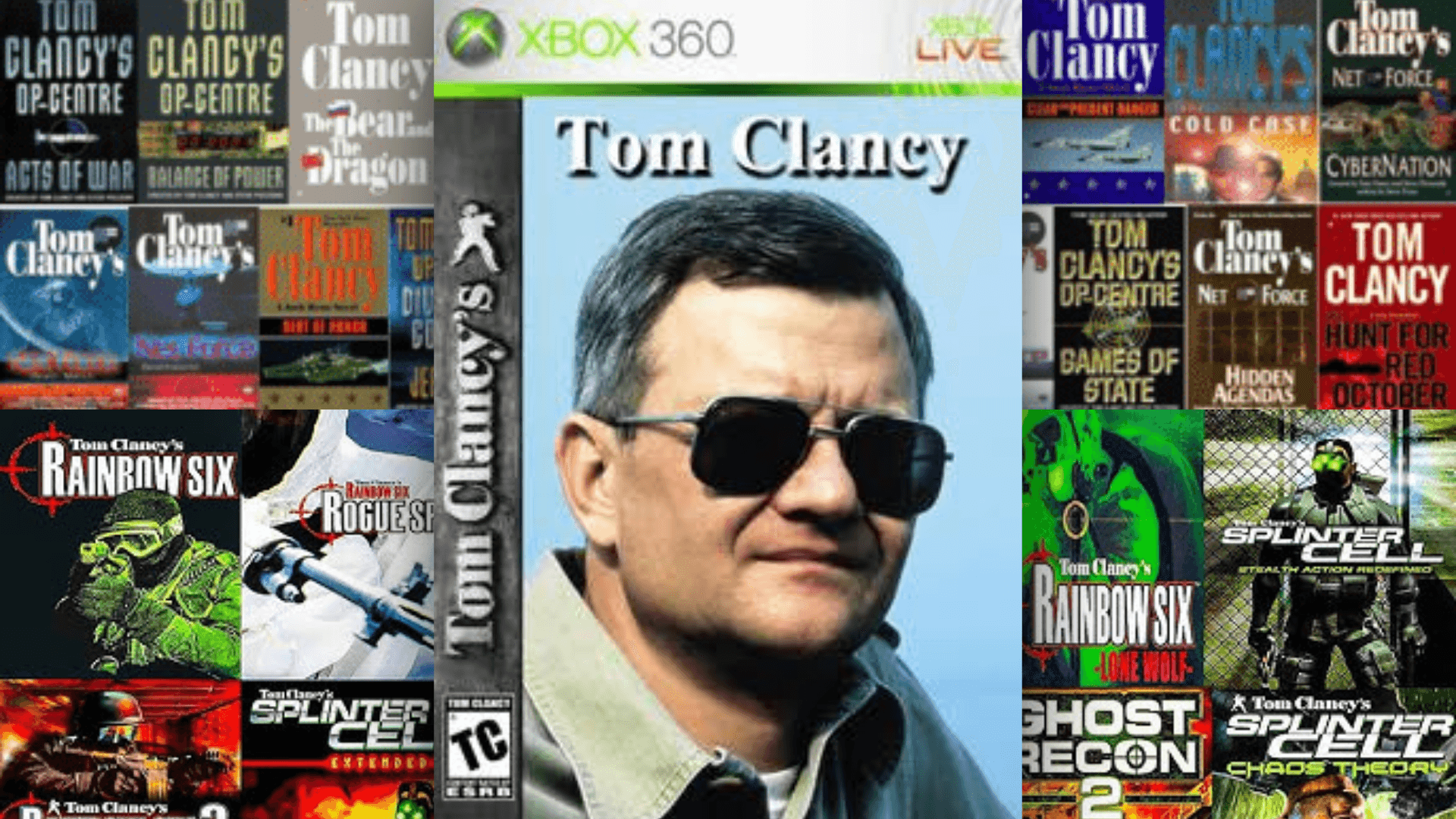
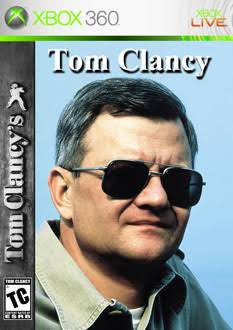
Many people first hear about Tom Clancy through gaming rather than his books. His name is prominently featured on some of the most iconic and long-running video game franchises in the military/tactical shooter genre—titles like Rainbow Six, Ghost Recon, Splinter Cell, and The Division.
These games, often bearing the "Tom Clancy's" branding, have introduced millions of players to realistic, high-stakes tactical gameplay, near-future military tech, and intense counter-terrorism scenarios.
What many gamers might not realize is that these experiences are rooted in Clancy's work as a bestselling novelist, even if the connection is sometimes indirect.
Clancy, the author behind techno-thriller masterpieces like The Hunt for Red October, Patriot Games, and Clear and Present Danger, revolutionized the genre with his detailed depictions of military operations, espionage, and geopolitical intrigue.
His meticulous research and focus on realism translated perfectly to interactive media.
In 1996, he co-founded Red Storm Entertainment specifically to bring his style of storytelling into video games. After Ubisoft acquired the studio in 2000 (and later secured perpetual rights to use his name), the "Tom Clancy's" label became a powerhouse brand for authentic, strategy-driven shooters.
The Games We Play and Their Ties to His Books
While not every game is a straight adaptation of one of his novels, they draw heavily from the themes, characters, and world-building in Clancy's writing—especially the "Ryanverse" featuring operatives like John Clark and Ding Chavez.
- Rainbow Six series (starting with the 1998 original): This is the most direct link.
The first game was developed in parallel with Clancy's 1998 novel Rainbow Six, which introduced an elite international counter-terrorist unit called Rainbow, led by John Clark (a recurring character from Clancy's books).
The game adapted elements of the book's plot—hostage rescues, eco-terrorism conspiracies, and biotech threats—while emphasizing tactical planning, team coordination, and "one shot, one kill" realism.
Early entries stayed close to the novel's spirit, and the series evolved into modern hits like Rainbow Six Siege (2015–present), which keeps the tactical core but adds multiplayer operators and crossovers.
The franchise helped popularize the tactical shooter genre.
Recent developments include Rainbow Six Mobile (worldwide launch February 2026) and crossovers like with The Division 2 (2025).
- Ghost Recon series (starting in 2001): This open-world tactical shooter series features U.S. special forces teams on covert missions.
While not based on a specific Clancy novel, it draws inspiration from his military fiction style, including realistic squad tactics, advanced gear, and global conflict scenarios.
Characters like John Clark have appeared in crossovers, tying it loosely to the broader Clancy universe.
A new first-person tactical entry (codename Project Over) is slated for 2025–2026.
- Splinter Cell series (starting in 2002): Centered on stealth operative Sam Fisher, this franchise was created as an original game under the Tom Clancy brand but heavily influenced by his espionage thrillers.
It captures the shadowy, high-tech spy world Clancy described in books like The Cardinal of the Kremlin or Executive Orders.
Sam Fisher has since crossed over into other Clancy games (like Ghost Recon Wildlands and Rainbow Six Siege), expanding the shared "Clancyverse." Recent re-releases include Pandora Tomorrow on PC/Steam (October 2025).
Other notable series include The Division (post-apocalyptic tactical RPG, inspired by real-world pandemic scenarios rather than a direct book; The Division 3 in production for ~2028, Survivors mode for The Division 2 in 2026) and earlier adaptations like The Hunt for Red October submarine sims from the late 1980s/early 1990s, which were loosely based on his debut novel.
In short, when you dive into a tense Rainbow Six hostage rescue, a stealthy Splinter Cell infiltration, or a squad-based Ghost Recon operation, you're experiencing the legacy of Tom Clancy's vision—even if you started with the controller instead of the page.
His books provided the blueprint for realism and tension that made these games addictive and influential, turning a novelist into one of gaming's most enduring brands.
Many players discover his original novels later and realize the games are paying homage to that same gripping, detail-rich storytelling that made him a legend.
Born Thomas Leo Clancy Jr. on April 12, 1947, in Baltimore, Maryland, Clancy was an American novelist renowned for pioneering the techno-thriller genre—a blend of suspenseful storytelling, espionage, military science, and intricate details of advanced technology.
His works often featured recurring characters like CIA analyst Jack Ryan and operative John Clark, set against Cold War and post-Cold War backdrops. Clancy's books sold over 100 million copies worldwide, with 17 becoming bestsellers. Beyond novels, his name extended to nonfiction, screenplays, video games, and even branded franchises continued after his death.
He transitioned from an insurance agent to a literary icon, influencing pop culture through films, TV series, and gaming. Clancy passed away on October 1, 2013, at age 66, but his legacy endures through ongoing adaptations and estate-authorized books.
Early Life and Education
Clancy grew up in Baltimore's Northwood neighborhood in a middle-class Irish-American family.
His father, Thomas Leo Clancy Sr., was a U.S. Postal Service employee, and his mother, Catherine Mary Clancy, worked in a store's credit department. He was the second of three children and participated in Boy Scouts Troop 624.
To afford private education, his mother saved money, allowing him to attend Loyola High School, a Jesuit-run Catholic school in Towson, Maryland, where he graduated in 1965.
He then enrolled at Loyola College (now Loyola University Maryland) in Baltimore, initially majoring in physics but switching to English literature due to poor performance in science courses.
Clancy was active on campus as president of the chess club and joined the Army Reserve Officers' Training Corps (ROTC), but severe nearsightedness (myopia) disqualified him from military service.
He graduated in 1969 with a Bachelor of Arts in English Literature, reportedly with a low GPA of 1.9/4.0. After college, Clancy worked briefly in insurance and business, earning related certifications, and joined an insurance firm in Hartford, Connecticut.
His early interest in military history and technology stemmed from a lifelong fascination with naval affairs, which he pursued as a hobby while working in insurance. This passion would later define his writing career.
Career Beginnings
Clancy's entry into writing was unconventional.
He ran an insurance agency in Maryland, which he purchased from his wife's grandmother in the 1970s.
In his spare time, he researched military topics and began writing.
His breakthrough came in 1984 with The Hunt for Red October, inspired by real events like the 1975 mutiny on the Soviet frigate Storozhevoy.
He submitted the manuscript to the Naval Institute Press, a small academic publisher in Annapolis, Maryland, which bought it for $5,000.
The book became a surprise hit after President Ronald Reagan praised it as "the perfect yarn," propelling sales to over 300,000 hardcovers and 2 million paperbacks.
This success launched Clancy into full-time authorship. By 1988, he had earned $1.3 million from his debut and signed a $3 million deal for three more books.
His meticulous research—drawing from unclassified sources, interviews with military experts, and collaborations like with author Larry Bond—earned praise for authenticity.
Clancy met figures like Steve Pieczenik, a former State Department official, who co-authored some works and inspired elements of his stories.
He became a staple at Penguin Putnam, with deals escalating: $14 million for Without Remorse in 1992, and by 1997, $50 million for two novels plus multimedia rights.
Clancy expanded beyond fiction, co-founding Red Storm Entertainment in 1996 for video games.
Ubisoft acquired it in 2000 for $45 million, and in 2008 bought perpetual rights to his name for games.
He also invested in sports, becoming a part-owner of the Baltimore Orioles in 1993 (under Peter Angelos) and serving as vice-chairman of community and public affairs committees.
A 1998 bid to buy the Minnesota Vikings fell through due to personal reasons.
Politically conservative and a Republican, Clancy dedicated books to figures like Reagan and supported causes like the NRA.
He opposed the Iraq War, criticizing its lack of justification, but praised aspects of George W. Bush's administration while clashing with neoconservatives like Richard Perle.
Major Works
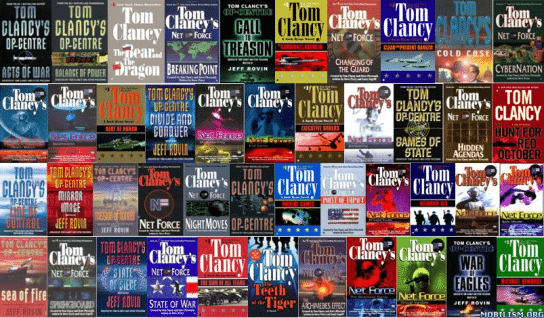
Clancy authored or co-authored over 20 novels, many in the "Ryanverse" universe featuring Jack Ryan, who rises from analyst to U.S. President.
His style emphasized technical detail, geopolitical intrigue, and heroic protagonists overcoming bureaucracy and threats.
Key Novels
- The Hunt for Red October (1984): CIA analyst Jack Ryan aids a Soviet submarine captain's defection.
- Red Storm Rising (1986, with Larry Bond): A non-Ryanverse World War III scenario between NATO and the Warsaw Pact; sold nearly 1 million copies in its first year.
- Patriot Games (1987): Ryan foils an IRA attack and becomes a target.
- The Cardinal of the Kremlin (1988): Espionage involving anti-missile technology.
- Clear and Present Danger (1989): Drug cartels and covert U.S. operations; sold 1.6 million hardcovers.
- The Sum of All Fears (1991): Nuclear terrorism plot.
- Without Remorse (1993): Origin story of John Clark.
- Debt of Honor (1994): Economic war with Japan, ending in a 9/11-like attack (prescient).
- Executive Orders (1996): Ryan as President facing bioterrorism.
- Rainbow Six (1998): Elite counter-terror team.
- The Bear and the Dragon (2000): U.S.-Russia alliance against China.
- Later works like The Teeth of the Tiger (2003) introduced Ryan's son; post-2003 novels co-authored due to health, e.g., Dead or Alive (2010, with Grant Blackwood), up to Command Authority (2013, with Mark Greaney).
Posthumously, the estate continues the series with authors like Mike Maden, Marc Cameron, Brian Andrews & Jeffrey Wilson, Don Bentley, M.P. Woodward, and others. Recent titles include *Tom Clancy Act of Defiance* (Jack Ryan #24, 2024), Tom Clancy Shadow State (2024), Tom Clancy Defense Protocol (2024), Tom Clancy Line of Demarcation (Jack Ryan Jr. #19, 2025), Tom Clancy Terminal Velocity (Jack Ryan Jr., 2025), and upcoming Rules of Engagement (Jack Ryan #27, May 2026). Division tie-ins like Tom Clancy's The Division: Hunted (2024) also persist.
Non-Fiction
Clancy wrote guided tours of military units and co-authored command studies:
- Submarine: A Guided Tour Inside a Nuclear Warship(1993)
- Armored Cav (1994)
- Fighter Wing (1995)
- Into the Storm (1997, with Gen. Fred Franks)
- Every Man a Tiger (1999, with Gen. Chuck Horner)
- Up to Battle Ready (2004, with Gen. Anthony Zinni).
He also oversaw branded series like Op-Center (1995 onward, by others) and Net Force (1998 onward).
Adaptations into Films, TV, and Games
Clancy's works inspired blockbuster media.
Films
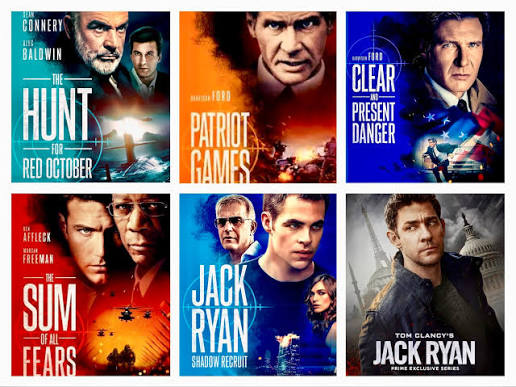
- The Hunt for Red October (1990): Directed by John McTiernan, starring Sean Connery and Alec Baldwin as Ryan; grossed $200 million.
- Patriot Games (1992): Harrison Ford as Ryan, directed by Phillip Noyce.
- Clear and Present Danger (1994): Ford again, on drug wars.
- The Sum of All Fears (2002): Ben Affleck as Ryan, nuclear plot; Clancy criticized changes in commentaries.
- Posthumous: Jack Ryan: Shadow Recruit (2014, Chris Pine); Without Remorse (2021, Michael B. Jordan as Clark).
- Upcoming: Untitled Jack Ryan film (TBA; John Krasinski reprising from the TV series, Wendell Pierce returning, filming began January 2025; directed by Andrew Bernstein).
TV
- Op Center (1995 miniseries)
- Net Force (1999 TV movie)
- Tom Clancy's Jack Ryan (2018–2023 Amazon series, John Krasinski as Ryan; four seasons).
Video Games
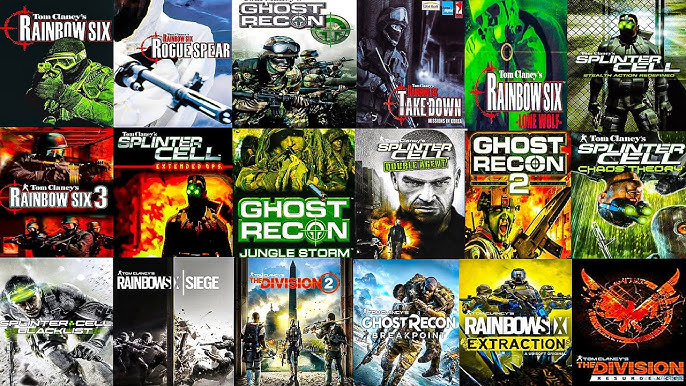
Clancy co-founded Red Storm for authentic military simulations. Key series (under Ubisoft's "Tom Clancy's" brand):
- Rainbow Six (1998–present): Tactical shooters.
- Ghost Recon (2001–present): Squad-based stealth.
- Splinter Cell (2002–present): Sam Fisher espionage.
- H.A.W.X. (2009–2010): Aerial combat.
- The Division (2016–present): Post-apocalyptic RPG.
- Others like EndWar (2008) and Elite Squad (2020). His influence persists, with fans noting how games like Rainbow Six stemmed from novels. Recent highlights: Splinter Cell: Pandora Tomorrow re-release (2025), *Rainbow Six Siege x The Division 2* crossover (2025), Rainbow Six Mobile (2026), new Ghost Recon (2025–2026), The Division 2 Survivors (2026).
Personal Life
Clancy married Wanda Thomas King, a nursing student, in 1969; they had four children (Michelle, Christine, Kathleen, Thomas).
They separated in 1995, divorced in 1999 amid reported infidelity, splitting his Orioles stake. In 1999, he married journalist Alexandra Marie Llewellyn (introduced by Colin Powell); they had one daughter and stayed together until his death.
A devout Roman Catholic, Clancy was conservative on issues like abortion but pragmatic on foreign policy.
He owned an 80-acre estate in Calvert County, Maryland (with a mansion, shooting range, and WWII tank), and a $16 million Baltimore penthouse.
Health issues included a prior heart attack and bypass surgery.
Death and Legacy
Clancy died of heart failure on October 1, 2013, at Johns Hopkins Hospital in Baltimore.
The Orioles honored him with tributes in 2014. His estate continues the Ryanverse, with dozens of posthumous books and thriving game franchises as of 2026. Awards include the 1988 Golden Plate, 1990 Alfred Thayer Mahan Award, and a 1992 honorary doctorate from Rensselaer Polytechnic Institute.
Clancy redefined military fiction, blending realism with excitement, influencing authors and media. Critics note his right-leaning themes but praise his homework-like approach to warfare narratives.
Recent discussions highlight his prophetic elements (e.g., *Debt of Honor*'s plane attack) and enduring adaptations. As one fan post noted, aspiring authors remember how an unknown like Clancy sold millions after a small press took a chance.