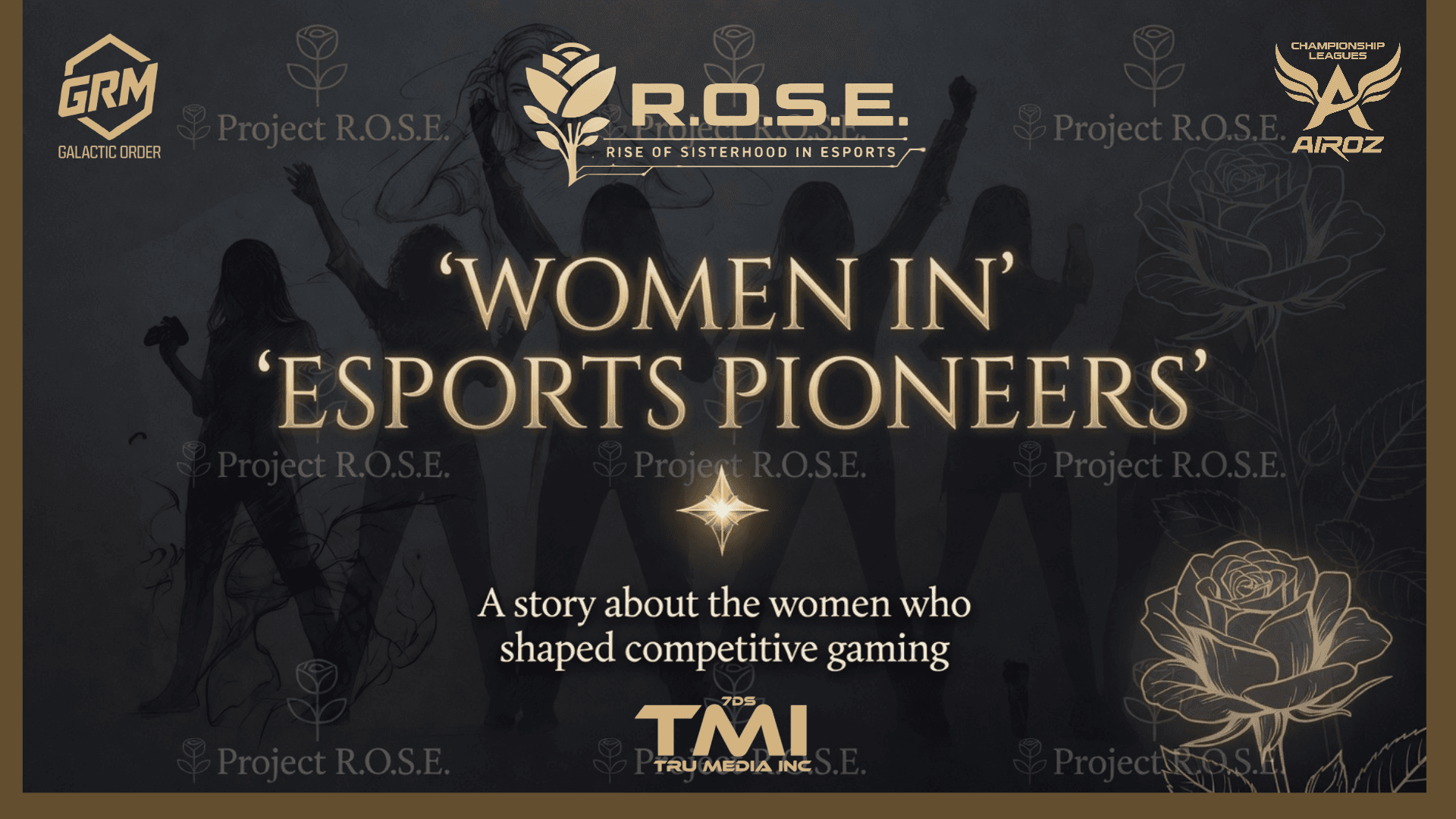
Women in esports history is a story of early presence, individual breakthroughs, persistent underrepresentation at the top, and growing efforts to build supportive spaces.
Women make up roughly 46-48% of all gamers globally, yet they represent only about 5% (or less) of professional esports players in most major titles.
This gap has narrowed in casual/viewership spaces but remains stark at the highest competitive levels.
Early Foundations (1970s–1990s)
Competitive gaming has roots in the arcade and early tournament era:
- 1972: The first documented video game tournament was Spacewar! at Stanford University. The winner was Rebecca Heineman (competing as Bill Heineman at the time; later transitioned).
- 1980: The massive Space Invaders Championship drew 10,000+ entrants across the U.S.
- 1984: Doris Self set a Qbert* world record at age 55 and became one of the first widely recognized female competitive gamers. She was later featured in the documentary King of Kong.
These early scenes were small and arcade-driven, with women participating alongside men before esports became a formalized, high-stakes industry.
Modern Esports Era & Pioneers (2000s–2010s)
As StarCraft, Counter-Strike, and fighting games exploded (especially in Korea), the scene became heavily male-dominated. Women were present but rarely reached the absolute top tier initially.
Key breakthroughs came in the 2010s:
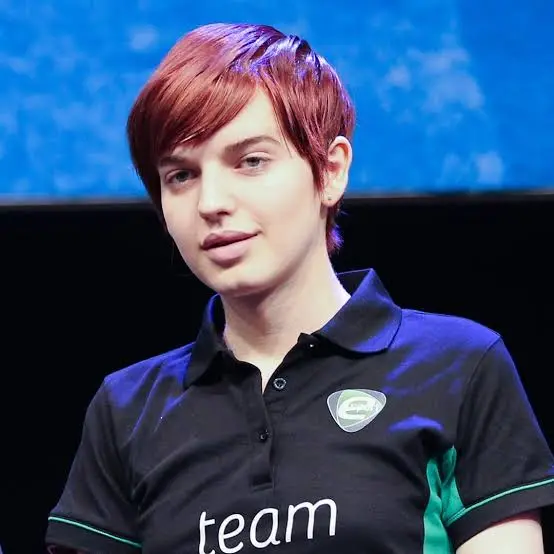
Sasha “Scarlett” Hostyn (Canada) stands as the most successful female esports player in history. A dominant StarCraft II Zerg player, she:
- Became the first woman to win a major SC2 tournament (IEM PyeongChang 2018).
- Earned the Guinness World Record for highest career earnings by a female competitive gamer (hundreds of thousands of dollars, topping other women by a wide margin).
- Consistently competed against (and beat) the world’s best players over more than a decade.
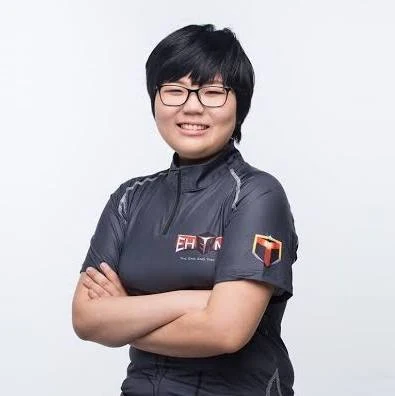
Kim “Geguri” Se-yeon (South Korea) made history in Overwatch:
- First woman signed to the Overwatch League (Shanghai Dragons, 2018).
- Rose through the Korean APEX scene as a young talent.
- Faced intense scrutiny and cheating accusations early on (later largely dispelled; her high mouse sensitivity was a point of discussion).
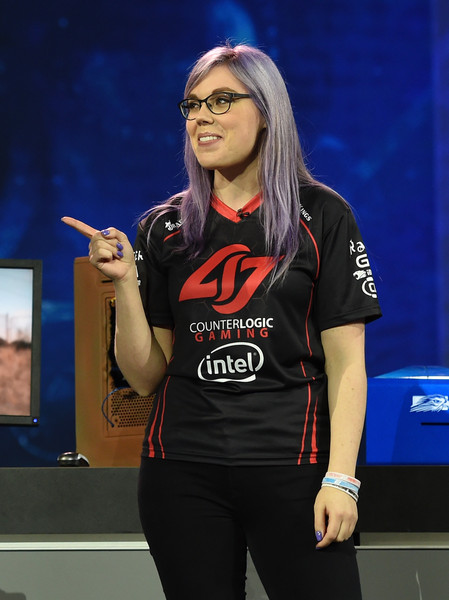
Other notables include Stephanie “missharvey” Harvey (CS:GO), various fighting game competitors, and all-female teams that won women-only events (e.g., in CS:GO Copenhagen Games).
Current Landscape (2020s)
- Participation: Professional female players remain ~5% or lower in most open esports circuits.
- Viewership: Women make up ~28–33% of esports audiences.
- Women-specific events: Growing. Female esports prize pools reached records (over $2M–$3M in recent tallies for dedicated events). ESL launched the Impact League (women-only). Valorant and other titles have seen stronger female representation in some regions.
- Streaming & Content: Many women have built large followings as streamers and personalities, sometimes more successfully than as pure pros.
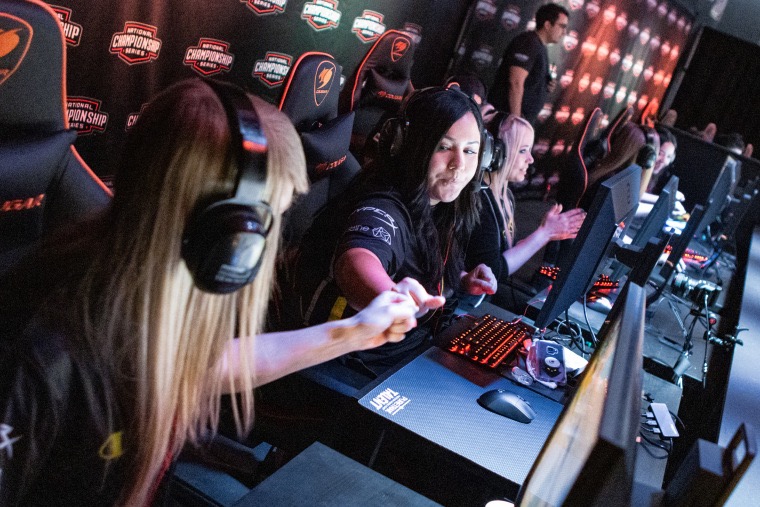
Challenges
Women in esports have faced real and well-documented obstacles:
- Toxicity and harassment: Surveys consistently show high rates (often 50–60%+) of female gamers experiencing abuse, sexist comments, doxxing, or exclusion in voice chat and online spaces.
- Stereotypes: Skill is frequently questioned (“girl gamer” assumptions), creating extra pressure to prove legitimacy.
- Pipeline issues: Fewer role models historically, cultural factors, and differences in average interest/time dedication to hyper-competitive grinding in certain genres.
- Earnings & Support: Top female pros earn far less than top males on average. All-women tournaments offer opportunities but are sometimes criticized as creating separate (lower-stakes) tracks.
These issues are real, though the scene has improved with better moderation, community pushback, and dedicated initiatives.
Progress and the Road Ahead
Organizations like Women in Games (founded ~2009) advocate for better representation.
New leagues, scholarships, and safe community spaces are emerging. Individual excellence continues to shine — Scarlett and Geguri proved that world-class skill transcends gender when the talent and dedication align.
Greater male variability in certain cognitive traits and interests (well-supported in psychometrics) helps explain part of the participation gap at the extreme right tail of competition, alongside cultural and historical factors. This doesn’t erase individual achievement or the value of reducing toxicity.
Initiatives like 🌹Project R.O.S.E.🌹the women-focused competitive community we discussed) represent the next chapter: building “sisterhood” networks that combine support, skill development, and high-level play.
They aim to lower barriers and create environments where more women can thrive without the default male-dominated dynamics.
Bottom line: Women have been in competitive gaming from the start.
The history features inspiring trailblazers who succeeded at the highest levels through talent and grit.
The gap persists, but visibility, dedicated communities, and individual breakthroughs are steadily expanding opportunities.
Esports rewards skill above all.
The players who put in the work — regardless of background — rise.
New projects focused on women can help grow that pipeline while the open scene continues evolving.🌹