Neuralink milestone
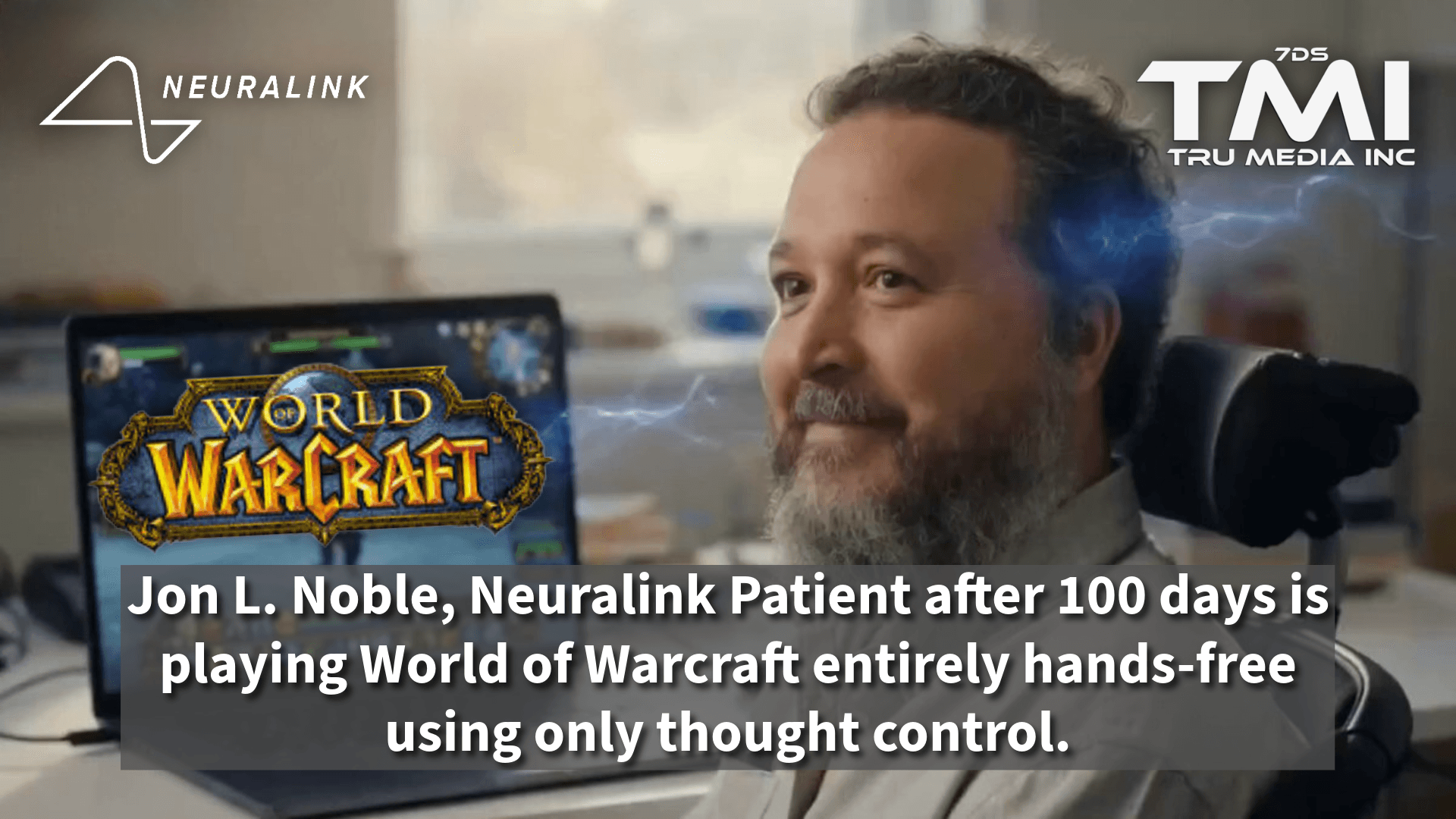
Jon L. Noble, a paralyzed British Army veteran (C4 spinal cord injury, quadriplegic), has reached 100 days with Neuralink's N1 brain-computer interface (BCI) implant.
He shared an emotional update on X, describing the experience as feeling like "science fiction" that's now his comfortable daily reality — and one of the standout highlights is his ability to play World of Warcraft entirely hands-free using only thought control.
Key details from Noble's 100-day journey:
- Early progress: Within the first few weeks, controlling a cursor on his MacBook felt natural.
He quickly advanced to full navigation of the computer (apps, browsing, etc.) using pure intention via the implant's 1,024 ultra-thin electrode threads in his motor cortex.
- Gaming breakthrough (around Day 80): He fired up World of Warcraft for the first time with thought control.
The initial raid felt "clunky," but once his brain synced with the BCI, it became "pure magic."
He is now raiding, exploring Azeroth, and playing at full speed — no mouse, no keyboard, just mental commands.
- Overall impact: Noble says he "can't imagine life without it."
The implant has restored a level of digital independence he lost years ago, turning complex tasks into seamless thought-based actions.
He shared video clips demonstrating the gameplay and Mac control.
This marks another impressive real-world demo for Neuralink's technology, building on earlier patients (like Noland Arbaugh, the first implant recipient, who also reached similar milestones).
Noble is reportedly among the growing number of participants (Neuralink has implanted around 18–21 patients so far, with ongoing trials expanding internationally).
The story has gone viral in gaming and tech communities, with many calling it a glimpse into future accessibility for people with paralysis — and a fun proof-of-concept for thought-controlled gaming.
Neuralink continues to emphasize safety and medical applications (restoring autonomy for those with unmet needs), while planning high-volume production and automated surgeries later in 2026.