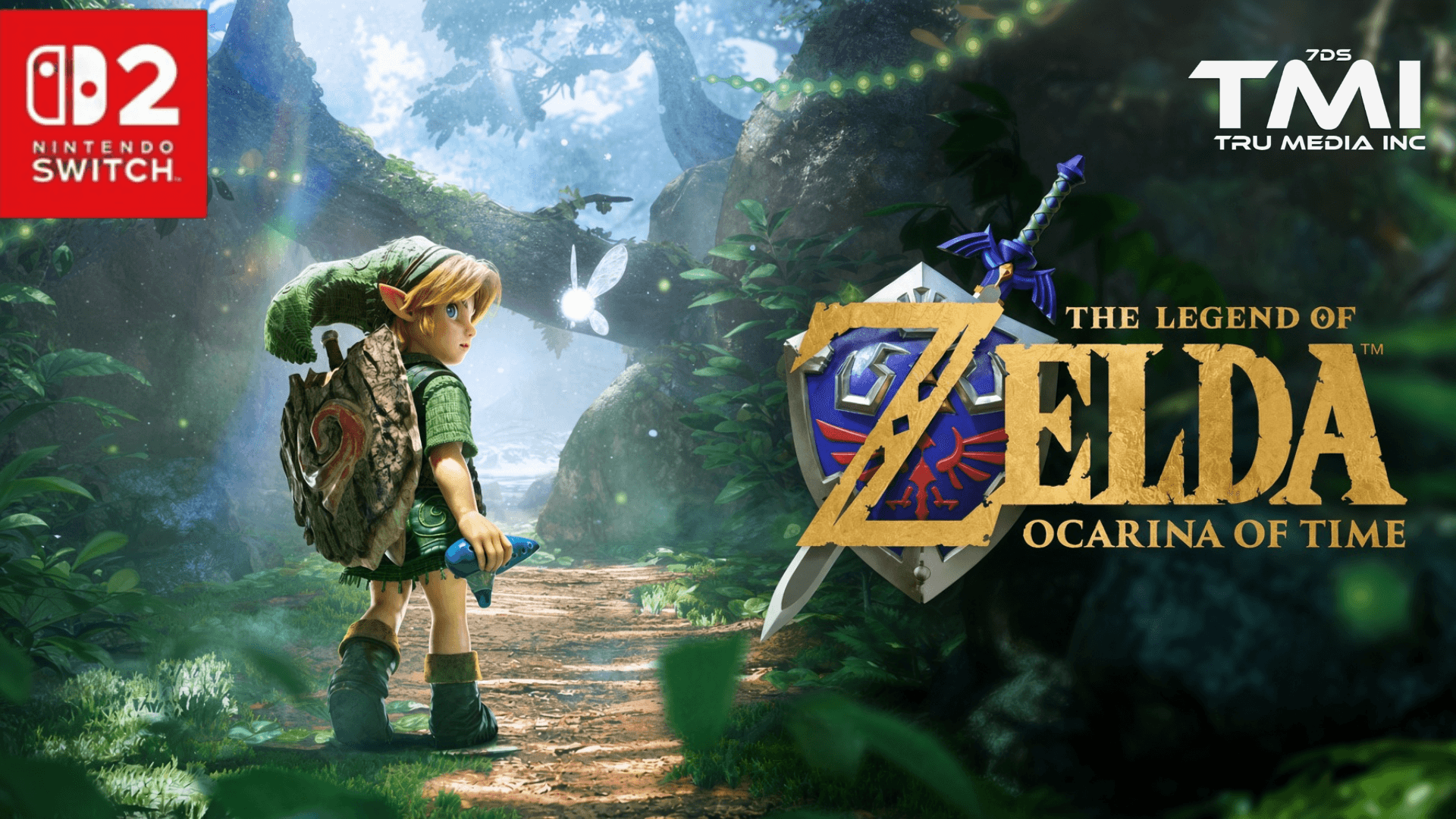
The Legend of Zelda: Ocarina of Time Switch 2 remake is getting strong, enthusiastic hands-on impressions from today’s previews (The Verge, VGC, Game Informer, Engadget, Eurogamer, Nintendo Life, GameSpot, and others).
It launches November 5, 2026, exclusively on Switch 2.
Critics describe it as a faithful but meaningfully modernized version of the 1998 classic—retaining its core identity and structure while fixing the most dated parts and making it far more welcoming for players who started with Breath of the Wild or Tears of the Kingdom.
Key Modernizations & Changes
- Dedicated jump button — Replaces the old automatic/contextual jumping. Widely praised as making movement feel more natural and controlled. Platforming is still light (it’s not Mario), but hopping onto vines, rocks, or across gaps feels intentional instead of finicky. Some returning players note a short adjustment period.
- Free 360° camera (right stick) + sprint — No more fixed or limited camera angles in many areas. Sprint (hold a button after a roll) replaces the constant forward-rolling spam people used to speed up traversal, especially in Hyrule Field.
- 60 fps — A huge upgrade from the original’s ~20 fps. Controls feel snappier and combat (including Stalfos fights) more responsive.
- Quick item swapping — On-screen radial-style menu (via shoulder buttons) instead of pausing into the full inventory. Makes dungeon navigation and tool use much smoother (relevant for places like the Water Temple).
- Improved swimming & diving — Freer underwater movement without the old Iron Boots on/off dance for basic swimming.
- Always-on minimap (with HUD options: Normal / Pro / Master for minimal or none).
- Threads of Time — In-game progress tracker (story events + next objective) viewable on pause.
- Zelda Notes integration (via Nintendo Switch app) — Maps, quest info, activity records, virtual ocarina, quizzes, and more on your phone.
- Microphone ocarina — Hum or play notes into the Switch 2 mic to perform learned songs.
- Expanded dialogue + full voice acting in cutscenes, plus more ambient NPC speech bubbles.
- Visual & audio overhaul — Completely rebuilt look (detailed textures, lighting, foliage, atmosphere). Symphonic orchestral music. Many note the Forest Temple especially shines with improved horror atmosphere (fog, stained glass, lighting). Castle Town is now a seamless, freely explorable connected area with free camera instead of static shots.
- Other QoL & small design tweaks — More generous rupees early on, redesigned puzzles/sections to fit new controls (e.g., in Deku Tree and Forest Temple), less intrusive Navi (“HEY! LISTEN!” is reduced and more optional), some new minor content in places like Kokiri Forest treehouses.
Overall Impressions
Previews from 90 minutes to a couple of hours (covering Kokiri Forest/Deku Tree, Hyrule Field/Castle Town, and Forest Temple as both Child and Adult Link) are consistently positive.
Reviewers call it the best-looking and best-playing version of the game yet, one that preserves the wonder while sanding off the rough edges of the N64 original and the 3DS version.
Common praise: It feels modern and accessible without losing what made Ocarina special.
Combat and exploration benefit most from the higher frame rate, free camera, and better controls.
The art style (more detailed and atmospheric than the original’s low-poly look) is generally well-received, though some earlier trailer reactions debated the child character designs.
It’s positioned as both a nostalgia trip for veterans and a strong entry point for newer Zelda fans.
Nintendo has also released a fresh overview trailer alongside the hands-on coverage.